Unlock Your Social Security Benefit Rates: A Full Guide\n\nHey there, future retirees and financial planners! Ever found yourself wondering,
“What exactly are my Social Security benefit rates, and how do they even figure that out?”
You’re not alone, guys! Understanding your
Social Security benefit rates
is absolutely crucial for planning your financial future, whether you’re just starting your career or are on the verge of retirement. It’s not just some abstract number; it’s a vital part of your financial safety net, and knowing how it works can make a
huge
difference in your golden years. This comprehensive guide is here to demystify everything, breaking down the complex world of Social Security into easy-to-digest chunks. We’ll explore what these rates mean, how they’re calculated, the different types of benefits available, and most importantly, how you can maximize what you receive. Get ready to dive deep and get a clear picture of your Social Security future!\n\n## What Are Social Security Benefit Rates, Really?\n\nWhen we talk about
Social Security benefit rates
, we’re fundamentally discussing the amount of money you or your family receive each month from the Social Security Administration (SSA). These rates aren’t pulled out of thin air; they are meticulously calculated based on your lifetime earnings and several other factors. At its core, your primary retirement benefit is determined by what’s called your
Primary Insurance Amount (PIA)
. Think of your PIA as your full retirement benefit – the amount you’re entitled to if you start receiving benefits precisely at your
Full Retirement Age (FRA)
. It’s the baseline from which all other benefit amounts are derived, whether you claim early, claim late, or if family members claim benefits based on your work record. The journey to calculating your PIA begins with your
Average Indexed Monthly Earnings (AIME)
. This isn’t just a simple average of everything you’ve ever earned; it’s a more sophisticated calculation that adjusts your past earnings for changes in the national average wage level over time. This indexing process ensures that your earlier earnings are brought up to a more current value, reflecting their purchasing power more accurately than a raw historical average would. The SSA takes your highest 35 years of indexed earnings, sums them up, and then divides by the total number of months in those 35 years to arrive at your AIME. Once your AIME is established, a formula with “bend points” is applied to determine your PIA. These bend points are dollar amounts that change annually and are designed to make the Social Security system progressive, meaning lower-income earners receive a higher percentage of their average indexed earnings back as benefits compared to higher-income earners. Understanding your
PIA
and
AIME
is the first critical step in grasping how your
Social Security benefit rates
are formed, giving you a powerful insight into your future financial stability.
It’s a robust system designed to provide a safety net, guys, and knowing these terms empowers you to understand your own specific situation better.
It truly is the bedrock of your retirement income, offering a crucial layer of financial security.\n\n## How Are Your Social Security Benefit Rates Calculated?\n\nUnderstanding precisely
how your
Social Security benefit rates
are calculated
is key to unlocking the mysteries of your future income. It’s a multi-step process that primarily hinges on your lifetime earnings, specifically your
highest 35 years of earnings
. The Social Security Administration (SSA) doesn’t just look at your gross income from decades past; they
index
those earnings to reflect changes in general wage levels over time. This means a dollar earned in 1985 is adjusted to an equivalent value in, say, 2023 dollars, ensuring that your past contributions maintain their real value. After indexing, the SSA calculates your
Average Indexed Monthly Earnings (AIME)
. To do this, they identify your 35 highest earning years, sum up those indexed earnings, and then divide that total by 420 (the number of months in 35 years). This AIME is a crucial figure because it’s the foundation for determining your
Primary Insurance Amount (PIA)
. Your PIA is the monthly benefit you’d receive if you start collecting benefits exactly at your
Full Retirement Age (FRA)
. The SSA applies a progressive formula to your AIME using specific “bend points” for the year you turn 62. These bend points mean that a higher percentage of your lower earnings count towards your benefit compared to your higher earnings, making the system more beneficial for lower-income workers. Beyond your initial calculation, your
Social Security benefit rates
are also subject to annual adjustments through the
Cost-of-Living Adjustment (COLA)
. This is super important because it helps your benefits keep pace with inflation. The COLA is typically announced in October each year and applied to benefits starting in December (paid in January). Without COLA, the purchasing power of your fixed benefit amount would erode over time, making it harder to cover living expenses. Furthermore, the
age at which you choose to claim your benefits
significantly impacts your final monthly payment. Claiming early reduces your benefit permanently, while delaying beyond your FRA can
increase
your benefit through
delayed retirement credits
. So, guys, it’s not just a simple arithmetic problem; it’s a dynamic calculation influenced by your earning history, inflation, and your strategic claiming decisions.\n\n## Different Types of Social Security Benefits and Their Rates\n\n
Social Security benefit rates
aren’t just for retirees; the system offers a diverse range of benefits designed to provide a financial safety net for various life circumstances. Understanding these different types is crucial because they each have unique eligibility requirements and calculation methods for their respective rates. The most commonly known, of course, are
retirement benefits
. These are paid to eligible individuals who have worked and paid Social Security taxes for a sufficient number of years (typically 10 years, earning 40 work credits). The
rate
for your retirement benefit is primarily based on your Primary Insurance Amount (PIA), which, as we discussed, is derived from your Average Indexed Monthly Earnings (AIME) and adjusted by your claiming age. But Social Security extends far beyond just you, guys! There are also
spousal benefits
, which allow a spouse to claim benefits based on their living or deceased partner’s work record. Generally, a spouse can receive up to 50% of the worker’s PIA if they claim at their own Full Retirement Age, or 100% if they are a surviving spouse. The
rate
for spousal benefits depends on the primary worker’s earnings and the spouse’s age when they claim. Similarly,
survivor benefits
provide crucial financial support to widows, widowers, and dependent children of a deceased worker. These rates can vary significantly, with a surviving spouse potentially receiving up to 100% of the deceased worker’s PIA (if claiming at their own FRA) and children receiving up to 75%. Again, the
benefit rate
is tied directly to the deceased worker’s earnings record. Finally,
disability benefits
are available for individuals who can no longer work due to a severe medical condition that is expected to last at least a year or result in death. The
disability benefit rate
is generally equivalent to the worker’s full PIA, as if they had reached their Full Retirement Age. This means that if you become disabled, your benefit amount would be the same as your full retirement benefit. Each of these benefit types plays a vital role in the comprehensive Social Security safety net, and their respective
Social Security benefit rates
are tailored to provide support when it’s most needed, covering situations from retirement to unexpected disability or the loss of a loved one.
It’s truly a multifaceted system designed to protect families across different life stages.
\n\n## When Should You Claim Your Social Security Benefits? Understanding the Impact on Rates\n\nDeciding
when to claim your
Social Security benefits
is one of the most significant financial decisions you’ll make, and it has a direct, long-lasting impact on your monthly
benefit rates
. There isn’t a one-size-fits-all answer, as the optimal claiming age depends heavily on your individual circumstances, including your health, other retirement income sources, and financial needs. The Social Security Administration defines your
Full Retirement Age (FRA)
, which is the age at which you’re entitled to receive 100% of your Primary Insurance Amount (PIA). For most people today, FRA is between 66 and 67, depending on your birth year. If you choose to claim
early
, meaning anytime between age 62 and your FRA, your monthly
benefit rates
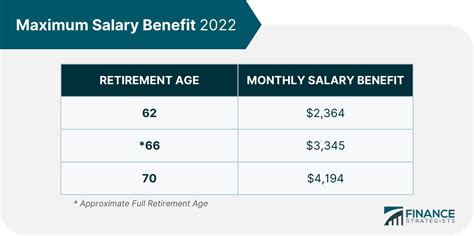
will be permanently reduced. For instance, claiming at age 62 can result in a reduction of up to 30% for someone with an FRA of 67. This reduction reflects the fact that you’ll be receiving benefits for a longer period. While an early claim provides immediate income, it comes at the cost of a smaller monthly check for the rest of your life. On the flip side,
delaying your claim
beyond your FRA can significantly
increase
your monthly
Social Security benefit rates
. For each year you delay past your FRA, up to age 70, you earn
delayed retirement credits
. These credits boost your annual benefit by a certain percentage, typically 8% per year. So, if your FRA is 67 and you delay until 70, you could increase your monthly benefit by 24% (8% x 3 years) for the rest of your life, which is a
huge
difference, especially over a long retirement! This strategy is particularly appealing for those who are healthy, have other income sources to cover expenses until age 70, and anticipate a long lifespan. It’s a guaranteed rate of return that’s hard to beat elsewhere. Before making your decision, guys, it’s really important to consider your life expectancy, your spouse’s benefits (if applicable, as your claiming age can affect their survivor benefits), and your overall financial picture. Running different scenarios using the SSA’s online tools can provide personalized insights into how your choice impacts your specific
Social Security benefit rates
.
Think of it as a strategic move – not just a checkbox – that can dramatically shape your retirement lifestyle.
\n\n## Important Factors Affecting Your Social Security Benefit Rates\n\nBeyond your claiming age, several other crucial
factors significantly influence your
Social Security benefit rates
. Understanding these elements can empower you to make more informed decisions about your work life and retirement planning. First and foremost is your
earnings record
. As we’ve highlighted, the SSA calculates your Average Indexed Monthly Earnings (AIME) based on your
35 highest earning years
. This means that periods of low earnings or no earnings can reduce your overall average, subsequently lowering your
Primary Insurance Amount (PIA)
and, consequently, your monthly benefit. If you have fewer than 35 years of earnings, the SSA will fill in the missing years with zeros, which can substantially drag down your AIME. Therefore, working at least 35 years, and ideally earning as much as you can during those years, is a powerful way to maximize your
Social Security benefit rates
. Another significant factor to consider is
working while claiming benefits
. If you claim Social Security benefits before your Full Retirement Age (FRA) and continue to work, your benefits might be temporarily reduced if your earnings exceed a certain annual limit. For example, in 2024, if you are under FRA, the SSA will deduct
\(1 from your benefits for every \)
2 you earn above
\(22,320. In the year you reach FRA, the reduction is \)
1 for every
\(3 earned above a higher limit (\)
59,520 in 2024), only until the month you reach FRA. Once you hit your FRA, these earnings limits disappear, and you can earn as much as you want without your benefits being reduced. What’s cool, though, is that any benefits withheld due to these earnings limits aren’t lost forever; they are used to recalculate your benefit at your FRA, giving you a slightly higher monthly payment moving forward. Finally, for those who have worked in jobs not covered by Social Security (like some government jobs or foreign employment), two provisions, the
Windfall Elimination Provision (WEP)
and the
Government Pension Offset (GPO)
, can reduce your
Social Security benefit rates
. WEP primarily affects your own earned Social Security benefits if you also receive a pension from non-covered employment. GPO affects spousal or survivor benefits if you receive a government pension based on non-covered work. These provisions are complex, guys, but they are designed to prevent “windfalls” for those who benefit from both Social Security and a non-covered pension.
Being aware of these provisions is vital for accurate retirement planning.
\n\n## Staying Up-to-Date with Social Security Benefit Rates and Changes\n\nKeeping tabs on your
Social Security benefit rates
and any potential changes is absolutely essential for proactive financial planning, guys. The system isn’t static; it evolves, and being informed ensures you’re never caught off guard. The absolute best way to stay informed about
your specific benefit estimates
is by regularly checking your
Social Security Statement
. This personalized statement, which you can access online by creating a “my Social Security” account on the official SSA website (ssa.gov), provides a wealth of information. It outlines your detailed earnings record throughout your working life, estimates your benefits at different claiming ages (early, full, and delayed), and also provides estimates for disability and survivor benefits. Reviewing this statement periodically allows you to catch any errors in your earnings record, which could directly impact your future
Social Security benefit rates
, and gives you a clear snapshot of what to expect. Think of it as your personal roadmap to retirement income. Beyond individual statements, it’s critical to be aware of the annual
Cost-of-Living Adjustment (COLA)
. As we briefly touched on, COLA is perhaps the most significant annual change affecting
Social Security benefit rates
for all beneficiaries. Announced typically in October, the COLA determines how much your monthly payment will increase starting the following January. This adjustment is tied to inflation, specifically the Consumer Price Index for Urban Wage Earners and Clerical Workers (CPI-W). While the COLA helps maintain the purchasing power of your benefits, its percentage can vary greatly from year to year, impacting your budget. Additionally, Congress occasionally passes legislation that could introduce more fundamental changes to the Social Security program, affecting eligibility rules, taxation of benefits, or even the benefit formula itself. While major legislative changes are less frequent, staying abreast of news from credible financial outlets and the SSA’s official channels is a smart move. Finally, for personalized assistance and the most accurate information regarding your unique situation and
Social Security benefit rates
, don’t hesitate to directly contact the Social Security Administration. Their website (ssa.gov) is a treasure trove of resources, publications, and online tools, and their phone support or local offices can provide tailored guidance.
Being proactive and informed is your best defense against surprises and your best strategy for maximizing your benefits.
\n\n## Conclusion\n\nAlright, guys, we’ve covered a lot of ground today on
Social Security benefit rates
! From understanding what they are and how they’re calculated based on your lifetime earnings, to exploring the different types of benefits and the crucial decision of when to claim, you’re now equipped with a deeper knowledge of this vital program. Remember, your Social Security benefits are a cornerstone of your retirement security, and making informed choices can significantly impact your financial well-being for decades to come. Don’t leave your future to chance; take the time to review your Social Security Statement, understand the implications of your claiming age, and stay updated on any changes. Planning today means a more secure and comfortable tomorrow.
Your retirement is worth the effort, so get out there and take control of your Social Security future!
