Unlock Honor Play 3: Test Point Guide & Solutions\n\n## What Are Test Points and Why Do We Need Them for Honor Play 3?\n\nAlright guys, let’s dive deep into something super important for anyone serious about smartphone repair and recovery:
Honor Play 3 test points
. These aren’t just random bits of metal; they are essentially tiny metallic contact points strategically placed on your device’s motherboard. Think of them as secret backdoors, giving you direct, low-level access to the device’s core system, often bypassing normal boot processes and software restrictions. They’re not for everyday tinkering; instead,
Honor Play 3 test points
are primarily used for
deep-level hardware diagnostics
,
software flashing
, and most critically, for
repairing bricked devices
. When your Honor Play 3 refuses to boot, gets stuck in a frustrating boot loop, or you’re facing persistent software issues that traditional methods (like factory resets or recovery mode) just can’t fix, these test points become your last resort, your ultimate troubleshooting and recovery tool. They offer an absolute game-changer for anyone dealing with truly complex device problems, providing a path forward when all else fails. Without understanding how to access and utilize these points, many advanced repairs would simply be impossible, leaving you with a very expensive paperweight.\n\nSo, why are these
Honor Play 3 test points
so incredibly important, especially for a device like the Honor Play 3? Well, modern smartphones, including your Honor Play 3, come equipped with robust security measures. These include locked bootloaders, various software protections, and strict boot sequence validations. While these features are fantastic for keeping your data safe from unauthorized access and maintaining system integrity, they can become a huge hurdle when you legitimately need to perform low-level operations or recover from a severe software malfunction. For instance, if your device gets
hard bricked
(meaning it won’t turn on at all, showing no signs of life, no charging indication, nothing), the standard USB connection, fastboot mode, or even recovery mode are often completely inaccessible. This is precisely where the test points shine brightest. By carefully locating and then briefly shorting specific
Honor Play 3 test points
on the motherboard, you can force the device into a special engineering mode, most commonly known as
Emergency Download (EDL) mode
. In EDL mode, the device communicates with your PC at a very basic, hardware-level, allowing specialized tools to directly
flash firmware
,
repair corrupted partitions
, or even
bypass certain software locks
like Factory Reset Protection (FRP) that might be preventing you from using your phone. Without these points, many critical repair scenarios would be impossible to tackle, making them a vital component in the advanced repair toolkit for the Honor Play 3. They offer a direct line to the processor and memory, enabling operations that are otherwise blocked by the device’s default software and security protocols. Understanding and safely utilizing these test points is a skill that can literally
resurrect your Honor Play 3
from severe software maladies or hardware-related communication failures, saving it from an untimely end. They truly provide a pathway to regain granular control when all other avenues are exhausted.\n\n## The Power of Test Points: Unlocking Your Honor Play 3’s Potential\n\nOne of the most common and arguably the most powerful uses of
Honor Play 3 test points
is to force the device into
Emergency Download (EDL) mode
. Guys, let me tell you, this mode is an absolute lifesaver when you’re facing a really dire situation with your phone! When your Honor Play 3 is completely bricked—and I mean
hard bricked
, where it doesn’t respond to power buttons, charging, or even fastboot commands, showing absolutely no signs of life—EDL mode is typically the
only way
to bring it back from the digital grave. By carefully locating and precisely shorting the correct
Honor Play 3 test points
on the motherboard, you can bypass the normal boot sequence entirely. This makes your device detectable by your computer as a Qualcomm HS-USB QDLoader 9008 device. This detection is critically important because it allows specialized flashing tools, often Qualcomm-based tools like QPST or QFIL, to directly communicate with the device’s internal storage (eMMC or UFS). In this mode, you gain the ability to
flash stock firmware
onto the device, effectively erasing any corrupted software and restoring your Honor Play 3 to its original, factory-fresh state. This meticulous process is often referred to as
unbricking your Honor Play 3
, and it’s an incredibly valuable capability for advanced users, independent repair technicians, and anyone who has mistakenly pushed their device too far. Without the ability to enter EDL mode via test points, many bricked devices would be deemed irreversible and permanently unusable. It’s like having a master key to reset the entire software foundation of your phone, providing a crucial recovery pathway when all seems lost and hope is fading fast.\n\nBeyond just unbricking,
Honor Play 3 test points
open up a host of other significant possibilities for deep device management. Have you ever faced the dreaded Factory Reset Protection (FRP) lock after performing a factory reset, where you can’t access your phone because you’ve forgotten the Google account credentials associated with it? Yeah, it’s a massive pain and a very frustrating security measure! Well, test points can provide a reliable way around this sticky situation. By getting your device into EDL mode using the precise
Honor Play 3 test points
, certain specialized tools can
bypass FRP on your Honor Play 3
by directly manipulating the system partitions where this lock is stored. This is an incredibly powerful feature, but it’s absolutely essential to use it responsibly and
only on your own device
to prevent unauthorized access. Furthermore, if you’re an enthusiast looking to
flash custom ROMs
, downgrade your software version due to compatibility issues, or even upgrade to a newer, unreleased firmware version that isn’t available via standard Over-The-Air (OTA) updates, using test points to enter EDL mode provides an exceptionally stable and reliable method. It ensures a low-level, uninterrupted flashing process, which is far more robust and less prone to errors than attempting to flash through less stable methods on a potentially faulty or uncooperative system. For developers and power users, the ability to reliably
flash firmware to Honor Play 3
via EDL mode is truly indispensable for experimentation, advanced customization, and recovering from failed flashing attempts. It gives you the ultimate control over your device’s software, allowing for deep modifications and repairs that standard user interfaces simply don’t offer. From fixing persistent software glitches to unlocking new functionalities, the proper and careful use of test points truly
unlocks your Honor Play 3’s full potential
and gives you mastery over its core functions.\n\n## Locating Honor Play 3 Test Points: A Deep Dive into Your Device’s Hardware\n\nAlright, guys, finding the precise
Honor Play 3 test points
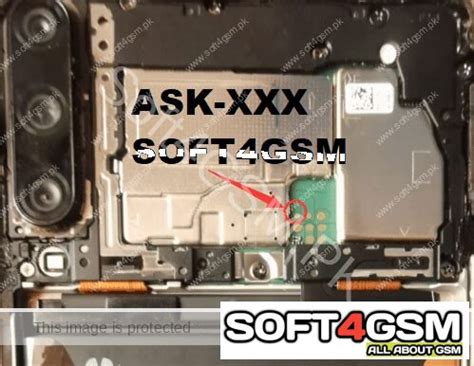
isn’t always like finding a clearly marked treasure map where ‘X marks the spot’ is explicitly labeled. It definitely requires a bit of keen detective work, a steady hand, and a whole lot of caution. Generally speaking, these test points are minuscule, often unlabelled metallic pads or pins strategically placed on the motherboard. You’ll typically find them located near critical components like the CPU (which, for Honor Play 3, would be a Qualcomm Snapdragon processor) or the eMMC/UFS storage chip. They are frequently hidden under metallic shields or tucked away behind other components, which means you’ll need to
carefully disassemble your Honor Play 3
just to even get a glimpse of them. This isn’t a task for the faint of heart or for those who are completely new to phone repair, as improper disassembly can very easily lead to irreversible and costly damage to your device. The first and most crucial step in this entire process is to
research diligently
. Reliable sources for
Honor Play 3 test point locations
typically come from highly experienced communities like XDA Developers, dedicated phone repair forums, or sometimes even leaked official service manuals. It’s imperative to
always cross-reference information
from multiple reputable sources to confirm the exact location and the precise procedure, as incorrect shorting can permanently damage your device’s delicate internal components. Look specifically for clear, high-resolution photos or detailed diagrams that precisely show which two (or sometimes more) points need to be shorted. While YouTube tutorials can be helpful, always ensure the creator is reputable, knowledgeable, and has a proven track record in accurate device repair. Remember, specific test point locations can sometimes vary even slightly between different board revisions or manufacturing batches of the Honor Play 3, so vigilance and thorough verification are absolutely key.\n\nOnce you’ve successfully gathered your reliable diagram for the
Honor Play 3 test points
, you’ll need to assemble the right tools for the job. Precision, my friends, is absolutely paramount here. You’ll definitely need a
set of fine-tipped tweezers
. These are essential for carefully and accurately shorting the minuscule test points without accidentally touching other components. If possible, opt for tweezers with non-conductive tips, or handle standard metallic ones with extreme care to avoid accidental shorts elsewhere on the board. A
good set of smartphone repair screwdrivers
(usually Pentalobe, Torx, and Phillips bits) is absolutely necessary for properly disassembling your phone. You’ll also require
non-conductive pry tools
(often made of plastic, commonly called spudgers) to safely separate components, unclip connectors, and open the phone’s housing without causing physical damage. A
magnifying glass or a jeweler’s loupe
can be incredibly useful, especially if those tiny points are hard to see clearly. While not always strictly necessary for basic shorting, a
multimeter
can be used by more experienced technicians to verify continuity or identify ground points, but for simply shorting two known test points, it’s usually not a mandatory requirement. Crucially,
anti-static wrist straps or mats
are highly, highly recommended to prevent electrostatic discharge (ESD) from damaging the highly sensitive internal electronic components. ESD is an invisible killer of electronics, so don’t skimp on this vital safety measure. Preparing your workspace by ensuring it’s clean, well-lit, and meticulously organized will significantly reduce the risk of errors and make the entire process of
locating and using Honor Play 3 test points
much smoother, safer, and ultimately, more successful. Taking your time, having the right tools, and double-checking every single step will pave the way for a successful repair or flash, bringing your Honor Play 3 back to life.\n\n## Safety First: Essential Precautions When Working with Honor Play 3 Test Points\n\nGuys, I cannot stress this enough:
safety is paramount
when you’re messing around with the intricate internals of your
Honor Play 3
, especially when dealing with those sensitive
test points
. This isn’t just about avoiding personal injury, which is always important, but crucially about preventing irreversible damage to your expensive device. The motherboard of your Honor Play 3 is a highly sensitive and sophisticated piece of engineering, and a single wrong move, a misplaced short, or an uncontrolled static discharge can turn your valuable smartphone into a worthless brick faster than you can say
