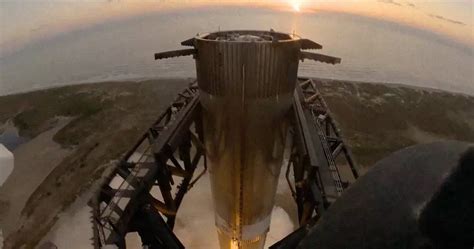
SpaceX Starship SN9: Relive the Groundbreaking FlightHey everyone! So, you’re probably wondering about the
SpaceX Starship SN9 launch date
, right? It’s a fantastic question that points back to some incredibly
pivotal moments
in the development of
SpaceX’s ambitious Starship program
. While we’re now looking at much larger, more integrated prototypes, it’s super important to remember the journey, and
Starship SN9
played a huge role in that early, rapid-fire testing phase down in Boca Chica, Texas. For those of you just joining the
SpaceX Starship
journey, SN9 was a
test article
, a towering stainless steel rocket designed to push the boundaries of
reusable spaceflight
technology. We’re talking about the very early days where each flight, successful or not, provided
invaluable data
for Elon Musk and the
SpaceX engineering teams
. So, let’s dive into the story of
Starship SN9
, unpack its significance, and see how it laid the groundwork for the monumental progress
SpaceX
has made since.# The Historical Context of Starship SN9: A Bold Leap ForwardWhen we talk about the
SpaceX Starship SN9 launch date
, we’re actually looking back at a specific, electrifying day:
February 2, 2021
. This wasn’t just any ordinary launch; it was another critical step in
SpaceX’s audacious plan
to develop a fully reusable, massive spacecraft capable of taking humanity to Mars and beyond.
Starship SN9
, short for Serial Number 9, followed its predecessor, SN8, which had made a spectacular, albeit fiery, landing attempt just a couple of months prior. The excitement around
SpaceX’s Boca Chica facility
was palpable, as everyone, from hardcore space enthusiasts to casual observers, was glued to the livestreams. This particular prototype, like its siblings, stood tall, a gleaming stainless steel monolith against the South Texas sky, representing the raw, iterative engineering philosophy that
SpaceX
embodies.
SN9’s primary mission
for this high-altitude flight test was to climb to approximately 10 kilometers (about 33,000 feet), perform a series of intricate maneuvers including a controlled aerodynamic descent – famously known as the “belly flop” – and then attempt a vertical landing. This belly flop maneuver is absolutely
crucial
for Starship’s reusability. It allows the massive vehicle to shed speed and control its descent through the atmosphere, much like a skydiver.
SpaceX engineers
needed to collect vast amounts of data on how the vehicle behaved in this orientation, how its body flaps performed, and how the Raptor engines would reignite for the critical flip and landing burn. The previous SN8 flight had demonstrated the belly flop beautifully, but experienced an issue with insufficient fuel pressure during the landing burn, leading to a hard landing.
SN9
was designed to address some of those lessons learned.The days leading up to the
SN9 launch
were typical for
SpaceX’s Starship development
: static fire tests, launch scrubs due to weather or technical issues, and constant updates from Elon Musk on Twitter, keeping everyone on the edge of their seats. This period truly showcased the
rapid prototyping approach
that
SpaceX
employs. They weren’t waiting for perfection; they were learning by doing, pushing boundaries, and accepting that some tests wouldn’t go perfectly. On that fated February day,
Starship SN9
soared into the sky, propelled by its three powerful Raptor engines. The ascent was flawless, the engine cutoffs precise, and the transition to the horizontal belly-flop configuration was executed with stunning grace. The images of this massive rocket descending horizontally were
truly breathtaking
, a testament to the ingenuity of the
SpaceX team
. However, as
SN9
initiated its flip maneuver for landing, only one of its two required Raptor engines successfully re-ignited and performed the full maneuver, resulting in an uncontrolled descent and a hard landing, culminating in an explosion. While visually dramatic, it was another step in a long series of
learning experiences
for
SpaceX
. It highlighted the immense challenges of developing a fully reusable, heavy-lift rocket capable of landing propulsively, but more importantly, it provided
invaluable data
that would be quickly integrated into the next prototypes.# Why Starship SN9’s Test Was So Important: Learning from the Edge of SpaceDespite its dramatic conclusion, the
SpaceX Starship SN9 test
was an
absolutely vital mission
for the entire
Starship program
. You see, folks, in the world of cutting-edge aerospace engineering, especially when you’re trying to build something as revolutionary as
Starship
, “failure” isn’t always a bad word. In fact, for
SpaceX
, these high-altitude flight tests, even those that ended in spectacular disassembly, were considered
rapid, iterative development successes
. The goal wasn’t just a perfect landing on the first try; it was to gather
critical data
on every single phase of the flight, from liftoff to the very last second of its descent.
Starship SN9
provided a treasure trove of information that informed subsequent designs and operational procedures.One of the primary objectives of the
SN9 flight
was to further validate the
aerodynamic control surfaces
, those large flaps (or canards) on the nose and base of the vehicle. During the belly-flop maneuver, these flaps are constantly adjusting to control
Starship’s
orientation and descent trajectory, effectively turning the massive rocket into a controlled falling object.
SpaceX engineers
were closely monitoring how these flaps performed under real atmospheric conditions, how their actuators responded, and how the vehicle handled varying winds and air densities. The data collected helped refine the control algorithms and hardware for future iterations. This kind of real-world testing is
unreplaceable
; simulations can only get you so far, and eventually, you have to build it and fly it to truly understand its behavior. The
lessons learned
about the flap performance during
SN9’s
descent were directly applied to prototypes like SN10 and beyond.Furthermore,
SN9
provided crucial insights into the
Raptor engine re-ignition sequence
and
propellant management systems
. The issue encountered during SN8’s landing was related to fuel pressure, and while SN9 faced a different engine re-ignition issue (one engine failed to light), it provided distinct data points that
SpaceX
could analyze. Understanding why an engine didn’t light, or why it didn’t perform optimally, is
paramount
for safety and reliability. This isn’t just about tweaking software; it’s about potentially redesigning propellant lines, optimizing igniter systems, and refining the complex sequence of events that must occur in a split second for a successful landing. Every test flight, especially those pushing the envelope, teaches
SpaceX
how to make the
Raptor engines
and their support systems more robust and reliable. The
Boca Chica test site
was essentially a giant outdoor laboratory, and
SN9
was a vital experiment in that ongoing scientific endeavor. The sheer volume of telemetry received during its flight allowed
SpaceX
to pinpoint areas for improvement, showing the value of this
test-driven development
model. Without these audacious, boundary-pushing flights,
SpaceX
wouldn’t be where it is today, preparing for orbital flights with an integrated Starship and Super Heavy stack.
SN9
truly was a monument to learning through bold experimentation.# The Evolution Beyond SN9: Paving the Way for Orbital DreamsFollowing the invaluable, albeit dramatic,
SpaceX Starship SN9 launch
, the
SpaceX team
didn’t miss a beat. Their iterative development process means they don’t dwell on a single outcome for long; they analyze the data, implement fixes, and roll out the next prototype, often within weeks. This
incredible pace
is what truly differentiates
SpaceX
in the aerospace industry, and it’s how they quickly evolved beyond the challenges faced by
SN9
. The immediate successor,
Starship SN10
, was already being prepared at the
Boca Chica facility
, ready to incorporate the lessons learned from
SN9
and previous flights. This rapid iteration is a cornerstone of
SpaceX’s philosophy
, enabling them to achieve in months what traditional aerospace companies might take years to accomplish.The very next high-altitude flight test,
Starship SN10
, which launched just a month later on March 3, 2021, aimed to prove that a
Starship
prototype could not only perform the complex aerodynamic maneuvers but also
stick the landing
. And it did!
SN10
made history by successfully completing the belly-flop, flip, and
vertical landing
, marking a monumental achievement for the program. Although
SN10
famously suffered a hard landing and exploded about eight minutes later due to damage sustained during the landing, the fact that it
landed upright
was a huge psychological and technical victory. It demonstrated that
SpaceX
was rapidly converging on the solution. The
SN9 experience
provided essential data points that refined engine re-ignition sequencing, propellant header tank pressurization, and the overall control algorithms that allowed
SN10
to briefly stand tall.Then came
Starship SN11
, which flew on March 30, 2021. This flight, unfortunately, experienced a significant issue during the landing burn, resulting in an explosion before or during the touchdown, shrouded in fog that made visual assessment difficult. However, once again,
SpaceX
quickly gathered the telemetry, identified the problem (a methane leak causing an engine fire), and integrated those
lessons into the next designs
. Each of these subsequent flights, building directly on the foundation laid by
SN9
and its predecessors, chipped away at the engineering challenges. The
Starship program
was demonstrating, in real-time, the power of
rapid prototyping
and
test-driven development
. We saw
SN15
finally achieve a fully successful flight and landing in May 2021, a pivotal moment where
SpaceX
showed the world that they had mastered the atmospheric re-entry and landing of a full-scale
Starship
prototype.From
SN9’s
fiery, but informative, descent to
SN15’s
triumphant landing, the evolution was clear.
SpaceX
was systematically solving the most complex engineering problems related to building a fully reusable, two-stage-to-orbit launch system. These early, suborbital hops were
absolutely critical
for proving the fundamental concepts, refining the
Raptor engines
, and understanding the vehicle’s behavior. They were the stepping stones that allowed
SpaceX
to transition from individual prototypes to integrating
Starship
with its massive
Super Heavy booster
and attempting orbital flights. The
SpaceX Starship
vision of multi-planetary life owes a huge debt to every single one of these early test articles, including the brave
SN9
, which pushed the envelope and provided the raw data needed to accelerate humanity’s reach for the stars.# Understanding SpaceX’s Iterative Development Strategy: The Path to InnovationThe story of
SpaceX Starship SN9
, and indeed the entire early
Starship program
, is a perfect illustration of
SpaceX’s groundbreaking iterative development strategy
. This approach, championed by Elon Musk, fundamentally differs from traditional aerospace development, which often involves years of analysis, simulations, and slow, methodical steps before anything is built or flown.
SpaceX
, on the other hand, embraces a philosophy of
build, test, learn, iterate, and repeat
– and they do it at an astonishing pace. For anyone following the
Starship journey
, it’s clear that this isn’t just a method; it’s the very heart of their innovation engine, especially evident in the critical data gleaned from flights like
SN9
.What exactly does this
iterative development
mean? It means
SpaceX
isn’t aiming for a perfect design on paper from day one. Instead, they design a functional prototype, even if it’s not the final version, and then they
build it quickly
. They
test it rigorously
, often to destruction, as we saw with
Starship SN9
and its predecessors/successors. The
critical part
is what happens next: they meticulously
learn
from the results, regardless of whether the test achieved all its objectives. Every piece of telemetry, every visual observation, every failure mode is analyzed with intense scrutiny. These
lessons
are then
immediately incorporated
into the next version, the next iteration, which is often already being built simultaneously. This continuous feedback loop dramatically compresses development timelines and allows
SpaceX
to tackle highly complex problems that would overwhelm traditional approaches.Think about it: the cost of a “failed” test flight for a
Starship prototype
like
SN9
is significantly lower than a “failed” launch of a fully developed, expensive orbital rocket. These early
Starship prototypes
were relatively inexpensive to build, leveraging readily available stainless steel and a straightforward construction process. This affordability allows
SpaceX
to take risks, to push the envelope, and to learn through real-world experimentation rather than endlessly modeling scenarios that might never fully capture reality. The
Boca Chica facility
itself became a testament to this strategy, with multiple
Starship prototypes
in various stages of assembly, testing, and flight, often side-by-side. This simultaneous work allows for parallel development and quicker recovery from setbacks.This rapid,
test-driven strategy
is particularly well-suited for a project as ambitious and unprecedented as
Starship
, which aims to colonize Mars. There’s no existing blueprint for a fully reusable, super heavy-lift rocket designed for interplanetary travel.
SpaceX
is essentially writing the textbook as they go, and
Starship SN9
was a vital chapter in that textbook. The data collected from
SN9
on engine performance, aerodynamic stability, and landing maneuvers directly influenced the design of future prototypes, ultimately leading to the more successful test flights and the integrated
Starship/Super Heavy
system we see today. Without the courage to
test, learn, and iterate
so openly and rapidly, the
Starship program
would undoubtedly be years behind, proving that sometimes, the fastest way to success is through a series of intelligent, well-analyzed “failures.”# The Future of Starship: Beyond Early Prototypes and Toward the CosmosWhile the
SpaceX Starship SN9 launch
and its early brethren were all about proving fundamental concepts and perfecting suborbital hops, the
future of Starship
is now firmly focused on orbital flights and, eventually, humanity’s expansion beyond Earth. The
SpaceX team
has moved beyond the “Serial Number” prototypes like
SN9
and is now integrating full-scale
Starship
vehicles with the colossal
Super Heavy booster
. This is where the real magic happens, guys: two fully reusable stages working in concert to deliver unprecedented payload capacity to orbit and beyond. The
lessons learned
from every single early test, including the belly-flop maneuver validated by
SN9
, are directly applied to these much larger, more powerful flight articles.The current phase of
Starship development
involves demonstrating full orbital capability. This means not just getting to orbit, but also proving the reusability of both the
Starship upper stage
and the
Super Heavy booster
. Imagine a rocket that launches, sends its payload to space, and then both stages return to land precisely back at their launch site, ready to be refueled and fly again within hours or days. That’s the
SpaceX Starship vision
, and it’s a game-changer for space exploration and colonization. The
SpaceX Starbase facility
in Boca Chica is now a hive of activity, preparing for these complex orbital flight tests, which involve intricate maneuvers, propulsive landings of both stages, and an unparalleled level of engineering coordination.The ultimate goals for
Starship
are nothing short of breathtaking. Firstly,
SpaceX
aims to use
Starship
to ferry humans and cargo to the Moon as part of NASA’s Artemis program, specifically as the Human Landing System (HLS) that will return astronauts to the lunar surface. This is a huge contract and a monumental responsibility, showcasing the trust placed in
SpaceX’s
innovative technology. Secondly, and perhaps even more ambitiously, Elon Musk’s long-term vision for
Starship
is to make humanity a multi-planetary species by enabling the colonization of Mars. This isn’t just about sending a few people; it’s about establishing a self-sustaining city on another planet, a feat that would fundamentally alter the course of human history.
Starship’s
immense cargo capacity and reusability are key to making this dream a reality.Beyond the Moon and Mars,
Starship
is also envisioned as a point-to-point Earth transportation system, capable of flying passengers to almost anywhere on the globe in under an hour. While this is a more distant goal, it highlights the versatility and revolutionary potential of the
Starship design
. Every single test, from
SN9’s
educational flight to the latest orbital attempts, contributes to building the knowledge base and technical prowess required to achieve these monumental goals. The
SpaceX Starship
program is not just building rockets; it’s building the future of space travel, one bold, iterative step at a time, continually pushing the boundaries of what’s possible, all thanks to the foundational work laid by those early, daring prototypes like
SN9
.So, there you have it, folks! While the direct question of “when is
SpaceX Starship SN9 launch date
?” points to a moment in the past – specifically,
February 2, 2021
– its legacy is very much alive in the incredible progress
SpaceX
continues to make.
Starship SN9
wasn’t just a rocket; it was a crucial data-gathering machine, a testament to
SpaceX’s
fearless approach to engineering, and an early, vital chapter in the story of humanity’s return to the Moon and journey to Mars. Every “failure” during those early test flights was a learning opportunity, a stepping stone toward the successful vertical landings and, eventually, orbital flights that we’re seeing today. The
rapid iterative development
model, so vividly demonstrated by
SN9’s
flight and its successors, proves that sometimes the most direct path to innovation involves taking calculated risks, learning from them, and quickly moving forward. So, as we look to the exciting
future of Starship
, with its ambitious goals of lunar landings and Martian colonies, let’s not forget the brave prototypes like
SN9
that paved the way, pushing the boundaries of what’s possible and bringing us ever closer to becoming a multi-planetary species. The journey has been wild, and trust me, it’s only just beginning!
