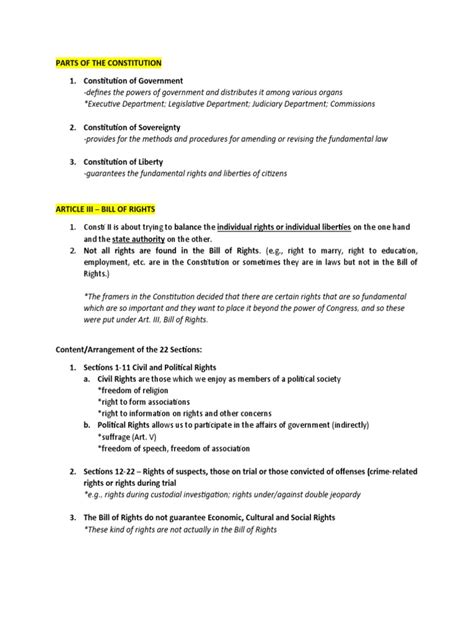
Laws Under Strict Review: Unlikely to be Constitutional Guys, have you ever wondered why some laws, even if they seem like a good idea on the surface, just don’t make it past the courts? Well, today we’re diving deep into the fascinating, sometimes frustrating, world of
constitutional review
, specifically focusing on what happens when a law faces the absolute toughest test:
strict scrutiny
. Trust me, when a law is subjected to this level of review, it’s genuinely
unlikely to be found constitutional
. It’s like asking a bantamweight boxer to go up against a heavyweight champ – the odds are stacked, big time. We’re talking about a legal standard so incredibly high that very few laws can clear it without tripping up. This isn’t just some legal jargon; it’s about protecting our most fundamental rights and ensuring that government power, while necessary, isn’t overreaching. When courts apply
strict scrutiny
, they are essentially saying, “Government, you’ve got some serious explaining to do here.” They want to know if there’s an absolutely
compelling reason
for the law, and whether it’s the
only way
to achieve that goal without stepping on our rights. If a law touches upon a
fundamental right
, like freedom of speech or the right to vote, or if it involves a
suspect classification
like race or national origin, then strap in, because it’s headed straight for strict scrutiny. The whole point of this super-high bar is to make sure that the government isn’t just making decisions willy-nilly, especially when those decisions could impact the very core of what it means to be free and equal in society. It ensures that any government action that potentially infringes on these vital areas is not only justified but
absolutely essential
and crafted in the narrowest possible way. It’s a critical check on power, making sure that our legislative bodies think long and hard before enacting laws that could have a profound effect on our basic liberties. This standard serves as a bedrock principle in constitutional law, signifying the courts’ commitment to safeguarding individual freedoms from governmental overreach. So, let’s break down why this particular level of scrutiny makes it so incredibly difficult for laws to survive, and what it all means for you and me, the everyday citizens living under these laws. It’s more than just legal theory; it’s about the practical application of justice and the protection of our inherent freedoms against potential infringement. Understanding this process helps us appreciate the delicate balance of power enshrined in our constitutional framework. This isn’t just for lawyers; it’s for everyone who cares about their rights. # Understanding Judicial Review and Its Levels Alright, let’s kick things off by understanding the big picture:
judicial review
. Simply put,
judicial review
is the power of the courts to decide whether a law, an action by the executive branch, or even a state constitution, violates the U.S. Constitution. It’s the ultimate umpire, ensuring that everyone plays by the rules set forth in our founding document. Without it, the legislative and executive branches could pretty much do whatever they wanted, and our constitutional rights might not mean much in practice. This essential power was famously established in the landmark case of
Marbury v. Madison
in 1803, solidifying the judiciary’s role as the guardian of the Constitution. But here’s the thing, guys: not all laws are reviewed with the same level of intensity. The Supreme Court has developed different “levels of scrutiny” to apply when examining various types of laws. Think of it like a spectrum, ranging from a relatively easy test to an incredibly difficult one. At the easiest end, we have the
rational basis review
. This is the lowest bar, and most laws that don’t involve fundamental rights or suspect classifications only have to pass this test. Under
rational basis review
, a law is usually upheld if it’s rationally related to a legitimate government interest. The burden is on the person challenging the law to show it has no rational basis, which is a really tough sell. For example, laws about economic regulations or general public welfare often fall under this category. Courts give a lot of deference to the legislature here; it’s practically a rubber stamp. As long as there’s
any
conceivable legitimate reason for the law, it’ll likely pass. This means that government simply needs to show that there is a reasonable, non-arbitrary connection between the law and a valid public purpose, such as public health, safety, or welfare. The government does not have to provide
evidence
that the law actually achieves its stated purpose, just that it
could
. This light touch ensures that legislatures have ample room to address various societal problems without constant judicial interference. Moving up a notch, we have
intermediate scrutiny
. This level is a bit tougher than rational basis review but not as rigorous as strict scrutiny. Laws subjected to
intermediate scrutiny
must serve an important governmental interest and be substantially related to achieving that interest. The government has to show more than just a
rational
basis; they need to show an
important
interest. This standard typically applies to classifications based on gender (sex) or illegitimacy. For instance, if a law differentiates between men and women, the government would need to demonstrate that this distinction is crucial for an important goal. It’s a middle-ground test, acknowledging that these classifications, while not as inherently suspect as race, still warrant a closer look. Think of it as a significant speed bump, not an impassable wall. While the government’s burden is higher here than with rational basis, it’s still less demanding than strict scrutiny. The ‘substantially related’ part means the fit between the law and the government’s objective doesn’t have to be perfect, but it can’t be tenuous or speculative either. This level often comes into play in cases involving equal protection challenges related to gender discrimination. Finally, we arrive at the Everest of constitutional review:
strict scrutiny
. This is the big one, the one that makes laws
unlikely to be found constitutional
.
Strict scrutiny
is triggered when a law infringes upon a
fundamental right
(like freedom of speech, religion, privacy, or the right to vote) or when it makes a classification based on a
suspect characteristic
(like race, national origin, or alienage). When
strict scrutiny
is applied, the government has the monumental task of proving two things: first, that the law serves a
compelling governmental interest
, and second, that it is
narrowly tailored
to achieve that interest and uses the
least restrictive means
available. This isn’t just “important”; it has to be
compelling
– a truly essential and overriding public need. And it can’t be a broad, sweeping law; it must be surgically precise, impacting fundamental rights or suspect classes only as much as absolutely necessary. Meeting these criteria is incredibly difficult, almost like winning the lottery, which is precisely why
strict scrutiny
often leads to laws being struck down as unconstitutional. It’s a testament to the courts’ commitment to safeguarding our most cherished liberties. # Why Strict Scrutiny is the Toughest Test Let’s get real, guys: when we say
strict scrutiny
makes laws
unlikely to be found constitutional
, we’re not exaggerating. This isn’t just a slightly harder test; it’s a legal gauntlet designed to catch only the most absolutely essential and perfectly crafted laws. It’s a powerful tool the judiciary wields to protect our core freedoms from government overreach. The very phrase “strict in theory, fatal in fact” is often used to describe this standard because, more often than not, laws subjected to it simply don’t survive. Why is it so incredibly tough? It all comes down to those two incredibly demanding prongs we just mentioned: the
compelling governmental interest
and the
narrowly tailored/least restrictive means
requirements. First up, the
compelling governmental interest
. This isn’t just any old reason the government might have for passing a law; it has to be something truly extraordinary. An interest is considered
compelling
if it’s essential or necessary for the protection of society or a vital government function. Think national security during wartime, preserving life, or preventing a widespread health crisis. Protecting general public welfare or efficiency isn’t enough. For instance, while promoting public health is generally a legitimate government interest, under strict scrutiny, the government must show it’s a
compelling
public health interest that absolutely necessitates infringing on a fundamental right. It’s not enough to say “it’s a good idea”; the government must articulate an overriding, urgent societal need. The burden here is squarely on the government to prove this interest, and it’s a heavy one, demanding concrete evidence and a clear, profound justification. They can’t just wave their hands and say it’s important; they have to
prove
it’s of the highest order. This high bar ensures that governmental actions that potentially infringe on fundamental rights are only taken when there is an extremely serious and undeniable justification. Next, and perhaps even harder to satisfy, are the requirements that the law be
narrowly tailored
and employ the
least restrictive means
. This means the law can’t be a sledgehammer when a scalpel is needed. If the government has a compelling interest, the law it enacts to address that interest
must
be specifically designed to achieve that goal and
only
that goal, without unnecessarily infringing on fundamental rights or burdening a suspect class. It can’t be overly broad, catching more people or activities than necessary. Think about it: if there’s any other way for the government to achieve its compelling interest that is
less intrusive
on people’s rights, then the current law fails the “least restrictive means” test. This is where many laws stumble. Lawmakers might have good intentions, but if their chosen method sweeps too broadly or if there’s a less restrictive alternative available, the law is toast. For example, if a city wants to prevent loud noise in a park (a legitimate interest), an outright ban on
all
speech might not be narrowly tailored if a ban on
amplified
speech during certain hours would suffice. The government has to prove not just that its chosen method works, but that it’s the
only way
to effectively achieve its compelling interest, or at least the
least impactful way
on fundamental rights. This demands an incredibly precise legislative craft, anticipating and preempting all possible less burdensome alternatives. The
narrow tailoring
component means the government cannot use a blunt instrument to achieve its goal. It must be a surgical strike, carefully designed to achieve the compelling interest without overreaching into areas not directly connected to that interest. The “least restrictive means” part is often the real killer because it means that if there is
any
alternative, however slight, that would achieve the same compelling interest with less infringement on fundamental rights, then the law at issue will likely be struck down. This effectively forces the government to exhaust all less intrusive options before resorting to measures that impact our most cherished liberties. This dual requirement often sets an almost impossible standard for legislatures to meet, making it abundantly clear why laws facing
strict scrutiny
are indeed
unlikely to be found constitutional
. It’s a rigorous test of both necessity and precision, ensuring that our fundamental rights are protected with the utmost vigilance. # The Impact on Fundamental Rights and Equality Folks, the reason
strict scrutiny
exists and is so incredibly strict is because it’s the ultimate safeguard for our
fundamental rights
and principles of
equality
. These aren’t just abstract legal concepts; they’re the bedrock of what it means to live in a free and just society. When a law infringes on a
fundamental right
, like our freedom of speech, the right to practice our religion, our privacy, or the ability to participate in the democratic process through voting, the courts say, “Hold on a second!” These rights are so essential to our liberty and human dignity that any government attempt to limit them
must
be absolutely critical and precisely targeted. They are often rights enumerated or strongly implied in the Bill of Rights or the Fourteenth Amendment. For instance, laws regulating political speech or religious practice will almost certainly face
strict scrutiny
. The government’s burden to justify such limitations is immense, reflecting the high value we place on these individual liberties. Similarly,
strict scrutiny
is triggered when a law creates classifications based on
suspect classifications
. We’re primarily talking about distinctions based on
race
,
national origin
, and sometimes
alienage
. The history of discrimination against these groups in the U.S. is long and painful, and the courts recognize that such classifications are almost always based on prejudice and rarely serve legitimate governmental interests. Therefore, any law that treats people differently because of their race, for example, is automatically viewed with extreme skepticism. The government needs to demonstrate that the racial classification serves a
compelling interest
and is
narrowly tailored
to achieve it, a task that has proven almost impossible in practice, leading to the striking down of many discriminatory laws. Think of landmark cases like
Korematsu v. United States
, which, despite controversially upholding Japanese internment during WWII under strict scrutiny, is now widely viewed as an egregious error and was formally repudiated by the Supreme Court decades later. It serves as a stark reminder of the immense power and potential for misuse, even under the strictest review. More recently, cases involving affirmative action policies (which also involve racial classifications) have often been subjected to strict scrutiny, with the Court constantly grappling with how to balance compelling interests like diversity with the constitutional imperative against racial discrimination. Protecting these fundamental rights and ensuring equality for all citizens, regardless of their background, is truly the core mission of
strict scrutiny
. It’s a recognition that some rights are so vital, and some classifications so historically loaded, that government actions touching upon them demand the highest level of judicial review. Without this rigorous standard, it would be far too easy for majoritarian governments to erode the freedoms of minority groups or individual liberties for perceived (but not compelling) collective benefits. It ensures that the promise of liberty and equality for
all
is more than just words on a page; it’s a lived reality, upheld by the unwavering vigilance of the courts. This level of review is an affirmation that certain aspects of our lives are simply beyond the reach of ordinary legislative action, requiring extraordinary justification for any infringement. It stands as a bulwark against the tyranny of the majority and a guarantee that the constitutional protections afforded to us are not easily dismissed or undermined by governmental convenience or fleeting public opinion. This makes
strict scrutiny
a pivotal mechanism for the continuous reification of civil liberties and fundamental fairness in American society. The judiciary, through the application of
strict scrutiny
, becomes the ultimate arbiter, ensuring that the Constitution’s promises of freedom and equality are robustly enforced, creating a shield for the individual against the potentially overwhelming power of the state. # Navigating the Legal Landscape: Challenges and Debates Alright, so we’ve established that
strict scrutiny
is a beast, a high hurdle that most laws just can’t clear, making them
unlikely to be found constitutional
. But applying this standard isn’t always cut and dry, even for the sharpest legal minds. There are significant
challenges judges face
in applying this highly subjective test, and it’s often a hotbed of
debates and criticisms
within the legal community. One of the biggest challenges is defining what exactly constitutes a
compelling governmental interest
. What one judge considers absolutely essential, another might view as merely important, or even trivial. There’s no fixed list; it evolves with societal values and the pressing issues of the day. This subjectivity can lead to inconsistencies and sometimes, as critics argue, allows judges’ personal philosophies to influence their decisions, rather than purely objective legal analysis. Similarly, determining if a law is truly
narrowly tailored
and uses the
least restrictive means
is incredibly difficult. It requires judges to imagine and evaluate all possible alternatives that the legislature
could
have chosen, which can feel a bit like playing armchair legislator. How do you really know if there isn’t a
slightly
less restrictive way to achieve a goal? This is where a lot of legal arguments get intense, with both sides presenting detailed hypothetical scenarios and policy considerations. Then there’s the famous critique:
“strict in theory, fatal in fact.”
This phrase, first coined by legal scholar Gerald Gunther, highlights the observation that almost no law ever survives strict scrutiny. Critics argue that this makes the test a mere formality – once strict scrutiny is applied, the outcome is predetermined: the law is struck down. This raises questions about judicial activism versus judicial restraint. Is the judiciary genuinely scrutinizing, or are they simply invalidating laws they disagree with under the guise of this tough standard? However, defenders of
strict scrutiny
argue that this “fatal in fact” outcome is precisely the point. The standard is
meant
to be exceptionally high because the rights and classifications it protects are so fundamental. If a law can’t meet this bar, it
should
be struck down, as it signifies an unacceptable intrusion on liberty or equality. They believe that if more laws
did
pass strict scrutiny, it would devalue our most cherished constitutional protections. They see the rarity of survival as proof of its effectiveness in safeguarding fundamental freedoms, rather than as a flaw. For
legal professionals
, navigating this landscape is a masterclass in strategy. When advising clients or drafting legislation, lawyers must anticipate whether a law might trigger
strict scrutiny
. If it does, they know the path ahead is extremely perilous. Legislative drafters, aware of this formidable hurdle, must be incredibly precise in their language, ensuring that any law touching fundamental rights or suspect classifications is meticulously justified and crafted to be as narrow and least restrictive as humanly possible. They often have to build an extensive legislative record, documenting the compelling interest and the lack of less restrictive alternatives, hoping to satisfy future judicial review. In court, attorneys challenging such laws will focus on demonstrating any broader application or available alternatives, while those defending the laws will emphasize the unique and compelling nature of the government’s interest and the indispensability of the chosen means. It’s a high-stakes chess match where the smallest detail can determine the constitutionality of a law and, consequently, its fate and impact on society. The future of constitutional law, particularly regarding evolving concepts of rights (like digital privacy or new forms of equality), will undoubtedly continue to test the application and boundaries of
strict scrutiny
. As society changes, so too do the contexts in which these fundamental questions arise, demanding constant re-evaluation and careful application of these demanding legal principles. These debates underscore the dynamic nature of constitutional law and the continuous effort required to maintain a balance between governmental authority and individual liberties. The careful calibration of
strict scrutiny
ensures that any encroachment on our most basic freedoms is met with the highest level of judicial skepticism and requires the most compelling justification imaginable. # The Ultimate Gatekeeper: Protecting Our Freedoms So, there you have it, folks. Understanding
strict scrutiny
really drives home why a law subjected to this level of review is
unlikely to be found constitutional
. It’s not just a legal technicality; it’s a critical mechanism designed to protect the very core of our freedoms and the principle of equality. When our government, however well-intentioned, proposes a law that touches upon our
fundamental rights
or creates distinctions based on
suspect classifications
like race, the courts become the ultimate gatekeepers, demanding an extraordinarily high level of justification. The requirements of a
compelling governmental interest
and the need for the law to be
narrowly tailored
and the
least restrictive means
available create a legal standard that few laws can ever meet. This isn’t a bug in the system; it’s a feature, ensuring that our most cherished liberties are not easily eroded by legislative convenience or fleeting public sentiment. While it certainly presents challenges for lawmakers and judges alike, and sparks plenty of debate in legal circles, its purpose remains clear: to safeguard individual rights against potential governmental overreach. It reminds us that our Constitution isn’t just a dusty old document; it’s a living, breathing framework that constantly works to uphold justice and liberty for all of us. So, the next time you hear about a law being challenged on constitutional grounds, especially if it involves fundamental rights or equality, remember the power of
strict scrutiny
. It’s a powerful defender, standing vigilant against unwarranted intrusions on our essential freedoms, making sure that when the government acts, it does so with the utmost care and justification, truly making laws
unlikely to be found constitutional
if they fail to meet this ultimate test. It’s truly a testament to the robust system of checks and balances that defines our democracy, ensuring that the
rule of law
protects every citizen’s intrinsic rights. It provides a constant reminder that power, while necessary, must always be exercised within constitutional boundaries, especially when it impacts the most sacred aspects of human freedom and dignity.
