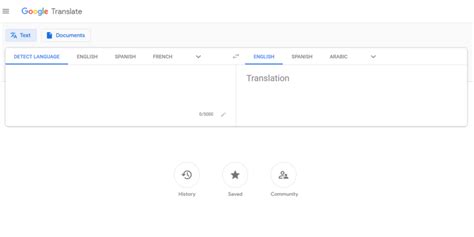
Google Translate: Your Ultimate Global Communication ToolAlright, guys, let’s talk about something truly
awesome
that’s probably sitting right there on your phone or in your browser:
Google Translate
. Seriously, if you’ve ever tried to understand a foreign menu, chat with someone who speaks a different language, or just browse a website not in your native tongue, you know the struggle is real. But thanks to this incredible piece of technology, those days of head-scratching confusion are largely behind us.
Google Translate
isn’t just a simple dictionary; it’s a powerful, constantly evolving tool that’s breaking down language barriers across the globe, making our interconnected world feel a whole lot smaller and more accessible. Whether you’re a seasoned traveler, a student, a business professional, or just someone curious about different cultures,
Google Translate
offers an unparalleled bridge to understanding. It’s truly
revolutionizing
how we interact with information and people from every corner of the earth. We’re going to dive deep into what makes it so indispensable, exploring its myriad features, how it works its magic, and how you can harness its full potential to make your life easier and more connected. Get ready to unlock a whole new world of communication!## What Exactly is Google Translate, Guys? A Deep Dive into its Core FunctionalityAlright, folks, let’s kick things off by really understanding
what Google Translate is
at its core. At its simplest,
Google Translate
is a free, multilingual statistical and neural machine translation service developed by Google. But that’s a bit technical, right? Think of it this way: it’s your
personal digital interpreter
, always ready to help you understand or be understood in over 100 languages. Launched back in 2006, it started as a statistical machine translation service, meaning it looked for patterns in massive amounts of text that had already been translated by humans. Over the years, it has evolved
dramatically
, especially with the adoption of
Neural Machine Translation (NMT)
in late 2016. This was a
game-changer
, transforming it from a good tool into an
incredibly sophisticated
one that understands context and grammar far better than its predecessors. The main goal of
Google Translate
is crystal clear: to demolish
language barriers
and foster better
global communication
. Imagine being able to instantly comprehend a street sign in Tokyo, respond to an email from a client in Brazil, or read an article in French – all without needing years of language lessons. That’s the power we’re talking about here. This isn’t just about word-for-word translation; it’s about trying to convey the
meaning
and
intent
behind the words, which is a far more complex and valuable undertaking. It works by taking text, speech, images, or real-time video from one language and converting it into another, attempting to maintain as much of the original nuance as possible. It leverages vast amounts of linguistic data, drawing from billions of pairs of translated sentences found across the web, to learn how different languages relate to each other. This constant learning process means
Google Translate
is always getting
smarter
and more accurate, making it an
indispensable translation tool
for anyone navigating our increasingly interconnected world. So, whether you’re trying to figure out what “Guten Tag” means or craft a thoughtful response to an international colleague,
Google Translate
is right there, ready to bridge that linguistic gap and enhance your
communication
efforts. It’s truly a marvel of modern technology designed with
us
in mind, making complex multilingual interactions feel almost effortless.## Beyond Just Text: Exploring Google Translate’s Amazing FeaturesLet’s move beyond the basics, guys, because
Google Translate
is so much more than just a text box where you type words and get translations. Its suite of
amazing features
makes it an incredibly versatile and powerful
language translation tool
for virtually any situation. First up, of course, is the classic
Text Translation
. You can type, paste, or even speak into your device, and get an instant translation. This is probably what most folks think of, and it’s super handy for quick lookups or crafting emails. But hold on, there’s more! Have you ever stumbled upon a website in a language you don’t understand?
Google Translate
has got your back with its
Website Translation
feature. Just paste the URL, and boom, the entire site is translated, allowing you to browse foreign content seamlessly. This is
invaluable
for research, international shopping, or just exploring global news. Then there’s the truly futuristic
Image Translation
capability. Point your phone camera at a sign, a menu, or a document in a foreign language, and
Google Translate
will overlay the translated text right on your screen, in
real-time
! This is a
lifesaver
when you’re traveling and trying to navigate unfamiliar surroundings. It’s like having a magic lens that deciphers any text you encounter. For those spontaneous conversations, the
Conversation Mode
is a
game-changer
. You and another person can speak naturally into your phone, and
Google Translate
will translate both sides of the dialogue in near
real-time
. Imagine chatting with a local artisan in Rome or making new friends during an international trip; this feature makes
real-time communication
a reality, fostering genuine connections that might otherwise be impossible. Don’t forget
Handwriting Translation
, a neat trick where you can write foreign characters on your screen, and
Google Translate
will recognize and translate them. This is especially useful for languages with non-Latin scripts or when you’re trying to decipher handwritten notes. For those moments when you’re offline or have limited data, the
Offline Translation
packs a punch. You can download language packs in advance, enabling you to translate text even without an internet connection, ensuring you’re never truly lost for words. Finally, the
Phrasebook
feature allows you to save frequently used translations, creating a personalized glossary for quick access. This is
super convenient
for travelers or language learners who want to keep track of important phrases. Each of these
Google Translate features
is designed to enhance your ability to understand and communicate across linguistic divides, making it an
indispensable toolkit
for modern global citizens seeking
instant translation
and better connection. It’s truly amazing how comprehensive and user-friendly this tool has become!## How Google Translate Actually Works: The Tech Magic Behind the ScenesAlright, so we’ve covered
what Google Translate is
and
what it can do
, but now let’s pull back the curtain a bit and peer into the
tech magic behind the scenes
. How does this incredible tool actually work its wonders? The secret sauce, guys, largely lies in something called
Neural Machine Translation (NMT)
. Before NMT,
Google Translate
relied on statistical methods, which were decent but often produced clunky, word-for-word translations that lacked natural flow and context. The switch to NMT marked a
massive leap forward
in
Google Translate technology
. Instead of translating individual words or short phrases, NMT models process entire sentences at once. They use complex
neural networks
– a type of artificial intelligence inspired by the human brain – to predict the most likely sequence of words in the target language. Think of it like this: rather than just swapping words, the system tries to understand the
meaning
of the source sentence and then generates a new sentence that conveys that same meaning in the target language. This is where the
AI language processing
truly shines. The NMT models are trained on
enormous datasets
of human-translated texts – billions of sentences found across the internet, in books, and in official documents. This massive amount of linguistic data allows the neural networks to learn the intricate relationships between words, phrases, and grammatical structures in different languages. They learn not just literal translations, but also how context influences meaning, how idioms are expressed, and how natural-sounding sentences are constructed. This extensive
machine learning
process is what enables
Google Translate
to produce translations that are far more fluent, coherent, and grammatically correct than older methods. It learns patterns and nuances, effectively figuring out the “rules” of language by observing countless examples. When you input text, the NMT system encodes the source sentence into a numerical representation, captures its
semantic meaning
, and then decodes it into the target language. This entire process happens almost instantaneously, thanks to powerful computational resources. The beauty of this
Google Translate technology
is its continuous improvement. As more data becomes available and as the algorithms themselves are refined, the system gets
smarter
and more accurate. It’s a constant cycle of learning and optimization. While it’s not perfect – language is incredibly complex, full of subtleties, humor, and cultural references that even humans sometimes struggle with – the advancements in
AI language processing
have made
Google Translate
an
unrivaled tool
for bridging linguistic gaps. Understanding
Neural Machine Translation
helps us appreciate the sophistication and computational power that goes into delivering those instant, increasingly natural-sounding translations right to our fingertips. It’s truly a testament to how far
machine learning
has come in making our global village more interconnected.## Practical Uses: Unleashing Google Translate’s Power in Your Daily LifeAlright, so we know
what Google Translate is
and
how it works
, but let’s get down to the really exciting part: how can
you
unleash its incredible power in your daily life? Guys, the
practical uses of Google Translate
are truly endless, making it an indispensable tool for almost everyone. Let’s start with perhaps the most obvious:
Global Travel
. Imagine landing in a foreign country where you don’t speak a word of the local language. With
Google Translate
, that daunting feeling quickly vanishes. You can use your camera to instantly decipher restaurant menus, read street signs, understand public transport directions, or even interpret museum descriptions. The conversation mode becomes your personal interpreter when you need to ask for directions, haggle in a market, or simply make polite small talk with locals. It effectively
breaks language barriers
on the go, allowing for richer, more immersive travel experiences. No more awkward pointing or relying solely on tourist traps! Then there’s the massive benefit for
Education and Language Learning
. For students, it’s a fantastic resource for understanding foreign-language texts, researching international articles, or getting a quick grasp of vocabulary. While it shouldn’t replace dedicated language study, it’s a phenomenal aid for comprehension and can help in grasping sentence structures and grammar. For language learners, it offers a quick way to check translations, practice pronunciation (by listening to the translated text), and even expand their vocabulary. It’s like having a patient, always-available tutor to help you on your linguistic journey. In the realm of
Business and International Communication
,
Google Translate
is a true game-changer. Businesses can translate emails, documents, or website content to communicate effectively with international clients, partners, or employees. This significantly expands market reach and fosters stronger global relationships. Individuals working in multicultural teams can use it to understand colleagues’ messages more clearly, ensuring no critical information is lost due to language differences. It streamlines
international communication
, making cross-border collaborations smoother and more efficient. Beyond these big categories, think about personal connections. Have friends or family who speak a different language?
Google Translate
helps you stay connected, allowing you to understand their messages or consume their native content. Enjoy foreign films, music, or news? It can provide quick insights, making the world’s diverse media more accessible. From understanding a recipe written in Italian to comprehending a social media post from a friend abroad, the
Google Translate uses
are woven into the fabric of our modern, interconnected lives. It’s not just a utility; it’s a bridge to culture, understanding, and connection, enabling millions of people every day to communicate freely and effortlessly, truly
breaking language barriers
in countless scenarios. The sheer versatility of this tool is what makes it so revolutionary for
global travel
,
language learning
, and
international communication
.## Maximizing Your Google Translate Experience: Tips and TricksAlright, fellow global communicators, while
Google Translate
is an absolute powerhouse, knowing a few
Google Translate tips and tricks
can significantly enhance your experience and ensure you’re getting the most out of this incredible tool. First and foremost, for
accurate translation
, remember that clarity is king. When inputting text, try to use
simple, grammatically correct sentences
. Avoid slang, overly complex jargon, or fragmented phrases. The clearer and more straightforward your source text, the better the output will be. Think of it as giving the AI the cleanest possible data to work with. Another fantastic tip, especially for travelers, is to utilize the
Offline Translation
feature. Before you head out on your adventure, download the language packs for the countries you’ll be visiting. This way, even if you lose internet connection – which, let’s be honest, happens way too often when you’re abroad – you’ll still be able to translate text and images. This is a
language translation best practice
that can save you a lot of hassle and ensure continuous communication. When using the
Conversation Mode
, try to speak clearly and at a moderate pace. Give the app a moment to process each sentence before the other person responds. This helps the AI accurately pick up on the words and provide a more seamless back-and-forth translation. Remember, it’s not magic, it’s sophisticated AI, and giving it optimal input helps it perform at its peak. It’s also crucial to understand
Google Translate limitations
. While it’s brilliant, it’s not a human interpreter. It can sometimes struggle with idioms, sarcasm, poetry, or highly specialized technical or legal language where nuanced meaning is paramount. Always double-check critical translations with a native speaker if the stakes are high. For
improving translations
, especially for longer texts, you can sometimes try translating a sentence or paragraph back into the original language (a “back-translation”). If the back-translation doesn’t make sense or significantly differs from your original intent, it’s a good sign that the initial translation might need some tweaking. This self-correction method can be surprisingly effective for identifying potential misinterpretations. Don’t be afraid to experiment with different phrasings in your source text if the initial translation isn’t quite right. Sometimes a slight rephrasing can lead to a much better output. Also, leverage the
Phrasebook
feature to save commonly used phrases or important translations. This not only saves time but also ensures consistency for frequently needed expressions. For quick lookups or when you’re unsure about a word, remember the ability to just type in single words or short phrases; it works like a super-fast dictionary. By following these
Google Translate tips
and understanding both its capabilities and its
Google Translate limitations
, you can truly master this incredible tool, ensuring you always get the most
accurate translation
possible and enjoy truly effective
language translation best practices
in all your multilingual endeavors. These small adjustments can make a
huge difference
in the quality and reliability of your translations.## The Future of Language Translation: What’s Next for Google Translate?As we look ahead, guys, it’s truly exciting to ponder
what’s next for Google Translate
and the broader landscape of
AI translation advancements
. We’ve already seen how far it’s come, evolving from basic word-swapping to sophisticated neural machine translation. But the journey is far from over! Google, along with other tech giants, is continuously pushing the boundaries of what’s possible in
evolving language technology
. One key area of focus is undoubtedly
contextual understanding
. While current NMT models are good at understanding sentences, future iterations will likely be even better at grasping the broader context of a conversation, document, or cultural reference. This means translations will become even more nuanced, accurate, and natural-sounding, diminishing the instances where humor, sarcasm, or subtle meanings get lost in translation. We can anticipate
Google Translate
becoming even more adept at distinguishing homonyms or understanding idiomatic expressions based on the surrounding text, leading to truly
seamless communication
. Another exciting development will be further
integration across platforms and devices
. Imagine truly invisible translation, where language barriers simply cease to exist in your daily digital interactions. This could mean more advanced integration into smart glasses, real-time translation features directly embedded into video calls without needing a separate app, or even sophisticated chips in hearing aids that offer instant spoken translation. The goal is to make language translation so effortless that it becomes an almost subconscious experience, a fundamental layer of our digital infrastructure. Furthermore, as AI models become more efficient, we’ll likely see improvements in
offline capabilities
, offering more languages with higher accuracy without needing an internet connection. This is a game-changer for accessibility in remote areas or during travel where connectivity is unreliable. There’s also a strong push towards making translation more accessible for
less commonly spoken languages
. As the AI training data expands and methods improve, we can hope to see support for a wider array of languages and dialects, truly democratizing
language translation
on a global scale. The
future of Google Translate
is essentially moving towards an experience where language is no longer an obstacle but a transparent bridge. It’s about achieving near-human-level translation quality, understanding not just words, but the
intent
and
emotion
behind them. This continuous pursuit of perfection in
AI translation advancements
promises a world where communicating with anyone, anywhere, in any language, becomes an effortless reality. It’s an exciting prospect that promises even greater global understanding and connection, truly fulfilling the vision of
seamless communication
across all cultures and borders through
evolving language technology
.## Conclusion: Embracing a Multilingual World with Google TranslateSo, there you have it, folks! We’ve journeyed through the incredible world of
Google Translate
, exploring its fundamental nature, its array of powerful features, the sophisticated
tech magic behind the scenes
with Neural Machine Translation, and its countless
practical uses
in our daily lives. From being your personal travel interpreter to a vital tool for
international communication
in business and a supportive aid for
language learning
,
Google Translate
has undeniably had a profound
impact
on how we interact with the diverse tapestry of global languages and cultures. It’s truly a marvel of modern
language technology
, constantly evolving and
breaking language barriers
that once seemed insurmountable, making the once impossible task of instant, accurate translation a daily reality for millions. We’ve seen how its ability to translate text, images, speech, and even entire websites, both online and offline, empowers users to navigate a globalized world with unprecedented ease. This tool isn’t just about converting words; it’s about fostering understanding, building connections, and democratizing access to information across linguistic divides. While it continues to improve, offering increasingly accurate and context-aware translations, it also reminds us of the beautiful complexity and richness of human language itself. It serves as a powerful bridge, not a replacement, for genuine human connection and deeper cultural understanding. By embracing
Google Translate
, we’re not just making our individual lives easier; we’re actively participating in the creation of a more interconnected, empathetic, and truly multilingual world. We’re opening doors to new ideas, new friendships, and new opportunities that might have otherwise remained firmly closed due to linguistic hurdles. As
AI translation advancements
continue to unfold, pushing the boundaries of what’s possible in
evolving language technology
, we can only imagine the even more astonishing ways
Google Translate
will shape our
global communication
landscape in the years to come. The
language technology future
is bright, promising even more seamless and intuitive ways to interact across borders. So, whether you’re planning your next big international trip, collaborating with colleagues from different countries, exploring foreign content, or simply curious about a phrase in another tongue, remember that this powerful tool is always at your fingertips, ready to help you navigate and embrace the rich diversity of our planet. Keep translating, keep learning, and keep connecting – because with
Google Translate
, the world truly is at your command, making
global communication
not just a dream, but a daily reality for everyone.
