Fixing Supabase 403 Errors: Access Denied To Buckets
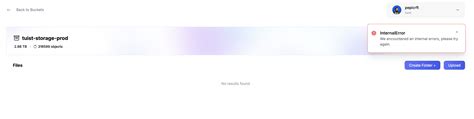
Fixing Supabase 403 Errors: Access Denied to Buckets
Hey there, fellow developers and tech enthusiasts! Ever been cruising along, building something awesome with Supabase, only to suddenly hit a wall with a dreaded Supabase 403 error: access denied to this bucket ? It’s one of those moments that can make you scratch your head and wonder what went wrong, especially when you’re sure everything was set up correctly. Don’t worry, you’re definitely not alone. This particular error, signifying an unauthorized access attempt , is a common stumbling block, but the good news is that it’s usually fixable once you understand the underlying causes. It essentially means that your application, or the user interacting with it, doesn’t have the necessary permissions to perform an action on a specific storage bucket within your Supabase project. This could be anything from trying to upload a file, download an image, or even just list the contents of a directory. Understanding the nuances of Supabase storage bucket permissions , Row Level Security (RLS) , authentication tokens , and user roles is absolutely crucial for diagnosing and resolving these issues.
Table of Contents
- Understanding the Supabase 403 Error: A Deep Dive
- Common Causes of Supabase 403 Access Denied Errors
- Incorrect Storage Bucket Policies
- Mismatched Row Level Security (RLS) Settings
- Missing or Invalid Authentication Tokens
- Incorrect User Permissions and Roles
- Misconfigured API Keys and Service Roles
- Practical Debugging Steps for Supabase 403 Errors
- Conclusion
In this comprehensive guide, we’re going to dive deep into the world of Supabase 403 errors, specifically focusing on those pesky access denied messages related to your storage buckets. We’ll explore the most common culprits, from misconfigured policies and incorrect RLS settings to expired authentication tokens and overlooked user permissions. Our goal here, folks, is to equip you with the knowledge and practical steps needed to not just fix the problem you’re currently facing, but also to prevent similar issues from popping up in the future. We’ll break down complex concepts into digestible insights, offering actionable advice and debugging strategies that you can apply directly to your projects. So, grab a coffee, get comfortable, and let’s unravel the mystery behind these Supabase storage access denials together. By the end of this article, you’ll be much more confident in securing your Supabase storage and ensuring your users have seamless, authorized access when they need it most.
Understanding the Supabase 403 Error: A Deep Dive
Alright, let’s kick things off by really digging into what a
Supabase 403 error
means, particularly when it screams “
access denied to this bucket
”. At its core, a 403 HTTP status code is a universal signal from a server that says, “Hey, I understand your request, but I’m refusing to fulfill it because you don’t have the necessary authorization.” It’s not a “file not found” (404) or a “bad request” (400); it’s a very specific
permission denied
message. In the context of Supabase, this almost always points to an issue with
who
is trying to access
what
, and
how
they’re trying to do it. When you encounter this error while interacting with your
Supabase storage buckets
, it means the authenticated user or the application’s service role, is lacking the correct
permissions
or
policies
to perform the requested operation, such as
upload
,
download
,
update
, or
delete
files or folders within a specific bucket. This isn’t just a random hiccup; it’s a security mechanism doing its job, albeit perhaps a bit too zealously in your current situation.
Common scenarios where you might run into this include a user trying to upload a profile picture but their
storage policy
doesn’t allow it, or perhaps your application is trying to retrieve a private document, but the
_authentication token_
used doesn’t grant access. Sometimes, it can even be an indirect consequence of your
Row Level Security (RLS)
policies on
PostgreSQL tables
if your storage policies are tied to user data stored in those tables. For instance, if your bucket policies dictate that only the
owner
of an object can access it, and your RLS prevents the current user from being identified as the
owner
in the database, you’ll get a 403. It’s a chain reaction, folks! The key to resolving these
Supabase 403 access issues
is to meticulously trace the path of your request, from the client’s action all the way through Supabase’s authentication and authorization layers. We need to identify exactly which part of the permission stack is saying “no.” This involves checking your
Supabase Storage policies
, ensuring your users are properly
authenticated
and assigned the correct
roles
, and verifying that your
API keys
(especially the
service_role
key) are being used appropriately and securely. Understanding these different layers is crucial for pinpointing the precise cause of the
access denial
and applying the correct fix. We’re talking about a multi-faceted security system, and a misconfiguration in any one area can lead to this frustrating but ultimately solvable problem. So, let’s keep this in mind as we delve into the common causes and their solutions, ensuring we leave no stone unturned in our quest to conquer these
Supabase storage errors
.
Common Causes of Supabase 403 Access Denied Errors
Alright, let’s get down to the nitty-gritty and pinpoint the most common reasons you might be seeing that dreaded Supabase 403 access denied to this bucket message. This section is all about identifying the usual suspects, so you can go straight to the source of the problem. Understanding these common pitfalls is half the battle, trust me! We’ll break them down into specific areas, from how you configure your storage itself to how your users are authenticated and authorized.
Incorrect Storage Bucket Policies
One of the absolute first places to look when facing a
Supabase 403 error
related to storage is your
storage bucket policies
. These policies are the
gatekeepers
of your files, folks! They define
who
can do
what
to the objects (files) within your buckets. Think of them as very strict bouncers for your digital assets. Supabase Storage allows you to define granular policies similar to
Row Level Security
for your PostgreSQL database, but applied specifically to objects. You’ll find these settings in your Supabase project under the
Storage
section, then by clicking on the specific bucket you’re having trouble with, and finally navigating to the
Policies
tab. This is where the magic (or the malfunction) happens. A common mistake here is having overly restrictive policies, or simply not having a policy that explicitly grants the necessary permissions to the user or role attempting the action. For instance, if you’ve set up a bucket to store user-uploaded avatars, but your policy only allows
authenticated
users to
upload
files, an
anon
user (someone not logged in) trying to upload would definitely hit a
403 access denied
. Similarly, if a policy exists to
select
(download) files, but it includes a
USING
clause that checks
auth.uid() = storage.owner(object_id)
, then only the user who
uploaded
the file can download it. If another authenticated user tries, boom –
access denied
. It’s crucial to differentiate between
public
and
private
buckets. While you might think making a bucket
public
solves all your problems, it doesn’t automatically mean
anyone
can upload to it. Public simply means objects
within
that bucket can be publicly accessed
if
their specific
storage policy
allows public reads. For uploads or modifications, specific policies are still needed. Always double-check that your
SELECT
,
INSERT
,
UPDATE
, and
DELETE
policies for the relevant bucket are correctly configured to match the intended actions and the roles of the users performing them. Ensure that the
USING
and
WITH CHECK
clauses in your policies accurately reflect your application’s logic. Remember, a missing
SELECT
policy means no one can read files, and a missing
INSERT
policy means no one can upload, leading straight to a
Supabase 403 error
for those operations. It’s about being precise with your permissions, guys, leave no ambiguity!
Mismatched Row Level Security (RLS) Settings
Now, here’s where things can get a little tricky, and often overlooked:
Mismatched Row Level Security (RLS) settings
can
indirectly
cause
Supabase 403 access denied errors
for your storage buckets. Wait, RLS for
PostgreSQL tables
affecting
storage
? Yes, you heard that right! While RLS directly applies to your database tables, your
storage policies
often rely on data stored within those tables to make authorization decisions. For example, let’s say you have a
profiles
table in your PostgreSQL database, and your
storage bucket policy
for user avatars checks
auth.uid() = profiles.user_id
to ensure users can only access their own avatar. If your
RLS on the
profiles
table
prevents the currently authenticated user from even
seeing
their own
profile
record (perhaps due to a bug in the RLS policy itself), then the
storage policy
will fail because it can’t find a matching
profiles.user_id
for
auth.uid()
. This effectively leads to a
Supabase 403 error
on the storage operation, even though the primary issue is with your
database RLS
. It’s like trying to get past a bouncer who needs to check your ID against a list, but the list itself is inaccessible to him! These kinds of indirect
permission denials
are notoriously harder to debug because the error message points to storage, but the root cause lies elsewhere. To troubleshoot this, you need to consider the full data flow. Are your
storage policies
relying on any
database queries
or
user data
that might be restricted by RLS? If so, you’ll need to verify that your RLS policies on those dependent tables are correctly configured to allow the necessary
SELECT
access for the
authenticated
user. You can test your RLS policies in the Supabase Studio SQL editor using
SET ROLE authenticated; SELECT * FROM profiles;
to see what a logged-in user can actually access. If the required data isn’t returned, then your
RLS settings
are indeed causing a ripple effect, resulting in that frustrating
Supabase 403
when you try to interact with your
storage bucket
. It’s a subtle but significant point, and keeping an eye on this interconnectedness will save you a lot of headaches in the long run.
Missing or Invalid Authentication Tokens
Moving on, let’s talk about
authentication tokens
– these are the golden tickets that tell Supabase
who you are
. A
Supabase 403 access denied
error can very frequently be traced back to a
missing or invalid authentication token
. Every interaction with Supabase that requires a logged-in user (i.e., not an
anon
user) relies on a JSON Web Token (JWT) provided by Supabase’s
auth
service. This token is usually sent in the
Authorization
header of your HTTP requests (e.g.,
Authorization: Bearer <your_jwt_token>
). If this token is
missing
from your request, Supabase won’t know who you are and will treat you as an
anon
user. If your
storage bucket policies
don’t allow
anon
access for the operation you’re trying to perform, you’ll immediately hit a
403 error
. It’s a classic case of “no ID, no entry”! But it’s not just about a
missing token
. An
invalid token
can also cause this issue. What makes a token invalid? It could be
expired
– JWTs have a limited lifespan, and if you’re using an older, refreshed token, or one that wasn’t properly renewed, it’s essentially useless. It could also be
malformed
or
tampered with
, though Supabase typically catches these with cryptographic checks. Another common scenario is when the token is simply
not passed correctly
in the request. Maybe there’s a typo in the header name, or the
Bearer
prefix is missing. Developers, we’ve all been there! To debug this, you’ll want to inspect your network requests using your browser’s developer tools or a tool like Postman for server-side requests. Look at the headers being sent when you attempt the storage operation. Is the
Authorization
header present? Is the JWT inside it valid and unexpired? You can usually decode a JWT (e.g., using
jwt.io
) to see its expiration time (
exp
claim) and other payload data (
sub
for user ID). If your client-side code isn’t correctly retrieving and attaching the latest
session token
after a user logs in or their session refreshes, you’re bound to run into these
token-related Supabase 403 issues
. Always ensure your Supabase client library is correctly initialized and handling session management, especially token refreshing, to prevent stale or invalid tokens from causing
access denials
.
Incorrect User Permissions and Roles
Beyond just having a valid token, the
Supabase 403 error
can also stem from
incorrect user permissions and roles
. Supabase leverages PostgreSQL’s powerful role system, and by default, you’ll often interact with the
anon
and
authenticated
roles. The
anon
role is for unauthenticated users, while the
authenticated
role is for anyone who has successfully logged in via Supabase Auth. However, you can also define
custom roles
within your PostgreSQL database and assign users to them, creating more granular permission sets. Your
Supabase Storage policies
(and your
RLS policies
) often specify which roles are allowed to perform certain actions. For example, a policy might explicitly state
FOR SELECT ON storage.objects TO authenticated USING (bucket_id = 'public_images')
, which means only
authenticated
users can download from the
public_images
bucket. If a user tries to download from
private_docs
and only the
admin
role has permission there, they’ll be met with an
access denied
.
It’s not just about
anon
vs.
authenticated
. What if your application has different tiers of users, like
free
,
premium
, and
admin
? You’d likely set up
custom roles
for these. If a
free
user tries to access a bucket reserved for
premium
users, and your
storage policy
checks
is_premium_user(auth.uid())
or
current_user_has_role('premium')
, they’ll get a
Supabase 403
because their current
role
or
permissions
don’t match the policy’s criteria. This means you need to carefully review the
roles
assigned to your users (you can inspect the
auth.users
table for this, or the claims within the JWT), and then cross-reference those
roles
with the specific conditions in your
storage bucket policies
and
RLS policies
. Are your policies checking for a specific
auth.uid()
, a custom
claim
in the JWT, or a database query that identifies the user’s role? Ensure that the user attempting the action actually fulfills those criteria. Sometimes, developers forget to update a user’s
roles
or
claims
after a subscription change, or a new feature is rolled out. Always make sure that the user’s current identity, as understood by Supabase Auth and reflected in their
authentication token
, aligns perfectly with the
permission requirements
defined in your
storage policies
to avoid these
Supabase 403 access denials
.
Misconfigured API Keys and Service Roles
Finally, let’s talk about
API Keys
and specifically the
service role
– these are powerful tools, and their
misconfiguration
can certainly lead to
Supabase 403 access denied errors
, often with much broader implications. Supabase provides two main types of API keys for client-side use: the
anon
(public) key and the
service_role
key. The
anon
key is meant for client-side applications and is associated with the
anon
PostgreSQL role. It respects all your
RLS
and
storage policies
that apply to
anon
or
authenticated
users. The
service_role
key, on the other hand, is extremely powerful. It has
_admin_
privileges and
bypasses
all
RLS
and
storage policies
. This key should
never
be exposed in a client-side application (like a web or mobile app) because it grants full read/write access to your entire database and storage, effectively giving anyone who finds it
sudo
access to your backend! Misusing these keys is a classic source of problems. If you accidentally use the
service_role
key in a client-side context where you intended to use the
anon
key, you might initially think everything is working. However, if you’ve then set up
RLS
or
storage policies
that rely on
auth.uid()
or other
user-specific claims
, using the
service_role
key (which operates as a superuser, not a specific
auth.uid()
) can ironically lead to
Supabase 403 errors
if your policies expect a user-context that the
service_role
key doesn’t provide. This is a subtle but critical point. The
service_role
is for
backend
operations, server-side functions, or secure environments where you need to perform actions with elevated privileges. If your client application somehow ends up using a
service_role
key for a storage operation, and that operation’s
storage policy
is set up to specifically check for
auth.uid()
(which the
service_role
context doesn’t have), then you might get an unexpected
_access denied_
. Conversely, if you’re trying to perform an
admin-level operation
(e.g., clearing an entire bucket) from a backend function, but you’re mistakenly using the
anon
key, you’ll definitely get a
Supabase 403
because the
anon
role doesn’t have the necessary privileges. Always verify which API key is being used for each operation and ensure it aligns with the required
permission level
. For client-side actions, stick to the
anon
key and properly authenticated user sessions. For privileged backend tasks, use the
service_role
key, but
only
in secure, server-side environments.
Never
expose your
service_role
key in public-facing code, folks; it’s a huge security risk that can completely undermine your
Supabase permissions
and lead to devastating
access issues
beyond just a 403.
Practical Debugging Steps for Supabase 403 Errors
Okay, guys, we’ve gone through the common culprits. Now, let’s roll up our sleeves and get into the practical, step-by-step
debugging process
for those pesky
Supabase 403 access denied errors
. When that error message pops up, it’s not a dead end; it’s a clue! Effective
troubleshooting
involves a systematic approach, using the tools Supabase provides and good old-fashioned detective work. The goal here is to gather enough information to pinpoint exactly
why
your request is being denied. Don’t just blindly tweak policies; let’s figure out the root cause together. The first and most crucial step in
debugging Supabase 403 errors
is to examine the full error message and context. Sometimes, Supabase will provide a more detailed message within the
error.message
or
error.details
property of the response, giving you a hint about the specific policy that was violated or the authentication issue. Always start there, as it can often save you a lot of time.
Next,
check your Supabase logs
. This is your forensic toolbox! Navigate to your Supabase project dashboard, then go to
Logs
in the sidebar. Filter by
API
logs and look for requests that correspond to the time you encountered the
_403 error_
. The logs often contain valuable insights into which specific
storage policy
was evaluated and failed, or if an
authentication token
was rejected. You might see messages like “
policy
storage_policy_name
denied access
” or “
JWT token expired
”. These logs are incredibly powerful for understanding the server’s perspective of your request and its
permission evaluation
process. Don’t skip this step! While you’re in the Supabase Studio, also make use of the
Storage Explorer UI
. Try to replicate the action that’s failing (e.g., uploading a file) directly through the Supabase UI. If it works there, but not in your application, it points to an issue with your client-side code,
authentication token handling
, or how you’re calling the Supabase client library. If it fails in the UI too, then the problem is almost certainly with your
storage bucket policies
or general
permission settings
.
Another invaluable tool is your
browser’s developer tools
(or network inspection tools like Postman for backend requests). Open the
Network
tab and observe the HTTP request that’s failing. Look at the request headers – specifically, verify the
Authorization
header. Is your
Bearer
token present? Is it the correct, unexpired JWT? You can copy the JWT and paste it into a site like
jwt.io
to quickly inspect its payload, check its expiration date, and see the
sub
(user ID) and
role
claims. This helps you confirm if the
authentication token
you’re sending actually represents the user you expect it to be, and if it’s still valid. Also, look at the response headers and body from the server. Sometimes, even though it’s a 403, the response body might contain a more descriptive error message from Supabase that elaborates on the
access denial
. Finally,
test with different authentication states
. Try making the problematic request as an
anon
user, then as an
authenticated
user, and if applicable, as a user with different
custom roles
. This helps isolate whether the problem is specific to unauthenticated access, or if the
permission issue
lies within your
authenticated
user policies or
role-based access controls
. By systematically going through these
debugging steps
, folks, you’ll be well-equipped to quickly identify and resolve those annoying
Supabase 403 errors
related to
storage access
and get your application back on track. It’s all about being methodical and using the right tools at your disposal to shine a light on the hidden corners of your
Supabase permissions
setup. You’ve got this!
Conclusion
Alright, folks, we’ve covered a lot of ground today, diving deep into the frustrating yet common world of Supabase 403 errors: access denied to this bucket . From understanding the core meaning of a 403 to meticulously exploring the most frequent causes—including incorrect storage bucket policies , mismatched Row Level Security settings , missing or invalid authentication tokens , incorrect user permissions and roles , and misconfigured API keys —we’ve laid out a comprehensive roadmap for troubleshooting and resolving these issues. Remember, a Supabase 403 is not a random occurrence; it’s a clear signal from Supabase’s robust security mechanisms doing their job. Your task as a developer is to understand why that signal is being sent.
The key takeaways here are to always be precise with your
storage policies
, ensure your
RLS
isn’t indirectly hindering storage access, meticulously handle
authentication tokens
on the client-side, assign
user roles
thoughtfully, and
never
expose your
service_role
key publicly. Utilizing the
Supabase logs
,
Studio UI
, and your
browser’s developer tools
will be your best friends in the
debugging process
. By adopting a systematic approach and understanding the interconnectedness of Supabase’s security layers, you’ll not only fix the immediate
access denied
problem but also build more secure and resilient applications in the future. So go forth, build awesome things, and don’t let a 403 scare you away from leveraging the full power of Supabase storage!
