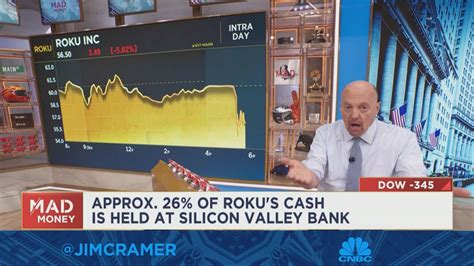
Decoding Today’s Bank Collapse News & Your SavingsHey there, financial navigators! If you’ve been scrolling through the news lately, you might have seen some buzz about
bank collapses
or headlines that make you wonder, “
What’s going on with my money?!
” Trust me, you’re not alone. It’s totally natural to feel a little uneasy when the financial world seems to be shaking. But don’t you worry, guys, because in this article, we’re going to dive deep into
today’s bank collapse news
, unpack what it all means, and most importantly, understand how safeguards like the
FDIC
are working to protect
your savings
. We’ll break down the complex stuff into easy-to-understand chunks, helping you gain clarity and peace of mind about your financial future. So, grab a coffee, settle in, and let’s unravel this together, focusing on high-quality content that truly provides value.## Understanding Bank Collapses and the FDIC’s Role
Bank collapses
, while unsettling, aren’t entirely new phenomena, and understanding them is key to demystifying the
latest bank news
. When we talk about a bank collapse, we’re essentially referring to a situation where a bank becomes
insolvent
—meaning it doesn’t have enough assets to cover its liabilities, or it experiences a severe
liquidity crisis
, where it can’t meet short-term obligations like customer withdrawals. This can happen for a myriad of reasons, from poor investment decisions and risky lending practices to widespread economic downturns that cause many borrowers to default on their loans. Sometimes, rapid and significant customer withdrawals, often triggered by panic or misinformation, can also push an otherwise stable bank to the brink, creating what’s known as a “bank run.” It’s a bit like a self-fulfilling prophecy; if everyone thinks a bank is failing and rushes to pull out their money, it
can
fail, even if its underlying assets were sound.Now, here’s where the
FDIC
—the
Federal Deposit Insurance Corporation
—steps in, acting as your financial superhero. The
FDIC
was established in 1933, right after the Great Depression, specifically to restore public confidence in the U.S. banking system and prevent widespread bank runs. Its primary role is to insure deposits in U.S. banks and thrifts, ensuring that if an insured bank fails,
depositors don’t lose their money
up to a certain limit. Currently, that limit is
$250,000 per depositor, per insured bank, for each account ownership category
. This means if you have a checking account, a savings account, and a CD at the same insured bank, and the total is under
\(250,000, your money is fully protected. If you have joint accounts or different ownership categories (like an IRA), you might have even higher coverage. The *FDIC* doesn't rely on taxpayer money for its operations; instead, it's funded by premiums that insured banks pay. When a bank collapses, the *FDIC* typically steps in very quickly, often over a weekend, to either facilitate the sale of the failed bank to a healthy one or directly pay out insured depositors. Their swift action ensures minimal disruption and protects depositors from financial loss, underscoring their critical role in maintaining financial stability. This robust system means that while a *bank collapse today* might grab headlines, for the vast majority of regular folks, their insured funds remain safe and accessible. Understanding this mechanism is crucial for anyone feeling anxious about the *bank collapse news* you might be encountering.## The Latest Bank Collapse News Today: What It MeansThe *latest bank collapse news today* can feel pretty intense, especially with the constant flow of information. While I can't give you real-time updates on *specific* banks failing right this second—because, well, I'm an AI and not a live news feed—we can definitely talk about the *trends and implications* that often accompany such events. Recently, we've seen a few high-profile bank failures, like Silicon Valley Bank and Signature Bank in 2023, which really brought the topic of *bank stability* into the spotlight. These instances weren't just isolated incidents; they highlighted specific vulnerabilities within certain sectors, particularly among banks heavily exposed to tech startups or crypto-related businesses. When a bank like that collapses, it’s rarely due to a single, simple issue. Instead, it’s often a cocktail of factors: *rapid growth without adequate risk management*, a concentration of deposits from a specific industry (making them vulnerable to sector-specific downturns), and a significant portion of uninsured deposits.What does this *today's bank collapse news* mean for the broader financial landscape? Well, for starters, it often triggers increased scrutiny from regulators. They pore over the balance sheets of other similar banks, looking for potential weaknesses and enforcing stricter guidelines to prevent a domino effect. This increased vigilance, while sometimes perceived as burdensome by banks, is ultimately designed to *strengthen the entire banking system* and protect consumers. Furthermore, market reactions can be swift. Investors might pull back from bank stocks, or there might be a flight to "safer" assets. However, it's really important to differentiate between systemic risk—where one failure could bring down many—and isolated incidents. Thanks to the robust regulatory framework and the *FDIC's* immediate intervention, most bank failures are contained. They don't typically spiral into a nationwide crisis, as they might have a century ago. The *FDIC* often steps in to ensure that critical services continue and that insured depositors can access their funds, sometimes as early as the next business day. This swift action helps to prevent panic and maintain confidence. So, while headlines about a *bank collapse today* can be alarming, it's vital to look beyond the sensationalism and understand the context: these events, while serious, are usually managed effectively by regulatory bodies to protect the broader financial system and, most importantly, *your deposits*. It’s a constant balancing act between fostering innovation and ensuring stability, and recent events have definitely prompted a renewed focus on the latter, which is a good thing for all of us.## What Does a Bank Collapse Mean for *Your* Money?Okay, let's get down to the brass tacks: when you hear about *bank collapse today*, what does it actually mean for *your hard-earned money* sitting in an account? This is often the biggest concern for everyone, and rightfully so. The absolute most important thing to remember, guys, is the **FDIC insurance**. For the vast majority of regular folks, their money is *safe*. As we discussed, the *FDIC* insures deposits up to *\)
250,000 per depositor, per insured bank, for each account ownership category*. This coverage is comprehensive, applying to checking accounts, savings accounts, money market deposit accounts, and certificates of deposit (CDs). It
doesn’t
cover things like investments in stocks, bonds, mutual funds, life insurance policies, annuities, or safe deposit box contents, because these aren’t considered deposits. It’s crucial to know that your bank
must be FDIC-insured
for this protection to apply, but nearly all mainstream U.S. banks are. You can usually spot an
FDIC
logo at the bank’s entrance, on their website, and on your statements.So, if your
FDIC-insured bank
were to collapse, what happens next? The
FDIC
moves incredibly fast. They’ll typically take over the bank, often selling its operations to a healthy bank. When this happens,
your accounts are automatically transferred
to the new bank, and you might not even notice a change beyond a new bank name on your statements or app. You’ll still have access to your funds, your debit card will still work, and your direct deposits and automatic payments will continue seamlessly. In rare cases where a suitable buyer isn’t found immediately, the
FDIC
will directly pay out insured depositors, usually within a few business days. This means you’d receive a check or direct deposit for your insured balance.
It’s truly a seamless process for the insured depositor.
The only people who generally face losses are those with uninsured deposits—balances exceeding the
\(250,000 limit in a single ownership category at one institution—or the bank's shareholders and bondholders, not the everyday customer with insured funds. This is why financial advisors often recommend diversifying your funds across multiple *FDIC-insured banks* if your total cash holdings exceed the \)
250,000 limit. While the headlines about
bank collapse today
might sound scary, for the vast majority of people,
your savings are incredibly well-protected
by a system that has been refined over nearly a century to ensure stability and public confidence. Rest assured, the
FDIC
is there, diligently watching over your money.## Navigating Financial Uncertainty: Tips for SaversEven with the
FDIC’s
robust protection, hearing about
bank collapse news today
can make anyone think about their own financial preparedness. It’s totally natural to want to ensure
your money is as secure as possible
, and there are some smart steps you can take to proactively navigate any financial uncertainty, even when things seem stable. First and foremost,
know your FDIC coverage
. Take a moment to tally up your deposits across all your accounts at a single bank. If your total exceeds the
$250,000 per depositor, per ownership category
limit, consider spreading your excess funds across multiple
FDIC-insured institutions
. This isn’t about panicking; it’s simply a prudent financial strategy to maximize your insurance coverage. Remember, each distinct bank offers its own $250,000 coverage. You can use the
FDIC’s Electronic Deposit Insurance Estimator (EDIE)
tool online to calculate your coverage for different scenarios, which is super helpful!Another crucial tip is to
diversify your investments beyond just cash
. While having an emergency fund in an
FDIC-insured
savings account is paramount, don’t put all your financial eggs in one basket. Consider a diversified investment portfolio that includes stocks, bonds, mutual funds, or real estate, appropriate for your risk tolerance and financial goals. These investments, while not
FDIC-insured
, are typically held by separate brokerage firms, meaning a bank collapse wouldn’t directly impact the underlying value of your investment holdings themselves (though the bank where your brokerage
account
is held for cash might still be
FDIC-insured
). Regularly
review your bank statements
and understand the fees and terms associated with your accounts. This helps you stay informed and spot any unusual activity. Also, maintain an
emergency fund
equivalent to three to six months of living expenses in an easily accessible,
FDIC-insured
account. This fund acts as a buffer against unexpected life events, reducing your reliance on credit and providing peace of mind. Staying informed about the broader economic climate and financial news, like the
bank collapse news today
, can also be beneficial, but always seek information from reputable sources and avoid falling prey to sensationalism or rumors. By taking these proactive steps, you’re not just reacting to headlines; you’re building a resilient financial foundation that can withstand various market shifts and
ensure your savings are protected and accessible
, no matter what the financial news cycle brings. This thoughtful approach empowers you and gives you control over your financial destiny.## Beyond the Headlines: The Bigger Picture of Financial StabilityWhen we read about
bank collapse today
or any significant financial news, it’s easy to get caught up in the immediate drama. However, it’s equally important to step back and understand the
bigger picture of financial stability
and the sophisticated ecosystem designed to prevent widespread crises. The regulatory environment surrounding banks is incredibly robust, far more so than before the 2008 financial crisis. Post-crisis reforms, like the Dodd-Frank Act, introduced stricter capital requirements, stress testing for large banks, and enhanced oversight. These measures mean that banks are generally
much better capitalized
and more resilient to economic shocks than they once were. Regulators like the
FDIC
, the Federal Reserve, and the Office of the Comptroller of the Currency (OCC) are constantly monitoring the health of financial institutions. They conduct regular examinations, analyze financial data, and identify potential risks before they escalate.Economic factors also play a huge role. Things like inflation, interest rate changes, and global economic slowdowns can all impact a bank’s profitability and asset quality. For instance, if interest rates rise rapidly, bonds that banks hold might lose value, potentially creating unrealized losses on their balance sheets. While this sounds complex, regulators are actively looking at these scenarios and often require banks to hold sufficient capital buffers to absorb such shocks. Moreover,
systemic risk
—the risk that the failure of one institution could trigger a cascade of failures throughout the financial system—is a primary concern for policymakers. The measures in place, including the
FDIC’s
ability to quickly resolve failing banks and the Federal Reserve’s role as a lender of last resort, are specifically designed to mitigate
systemic risk
and maintain overall market confidence. These interventions are often subtle and happen behind the scenes, preventing the public from ever needing to worry. So, while a
bank collapse today
can be an attention-grabbing headline, it’s crucial to recognize that it typically represents an isolated incident being managed within a highly regulated and supervised system. The goal is always to protect depositors, maintain financial stability, and ensure the smooth functioning of the economy. Understanding this broader context helps to put individual
bank collapse news
into perspective, reinforcing the idea that your financial system is designed with multiple layers of protection, working tirelessly to keep
your money safe
and secure.## ConclusionAlright, guys, we’ve covered a lot of ground today, from unpacking the nitty-gritty of
bank collapses
to understanding the incredible shield that is the
FDIC
. It’s clear that while headlines about
bank collapse today
can certainly be unsettling, the system in place is designed with your protection as a top priority. The
FDIC’s
diligent work, coupled with robust regulatory oversight, ensures that for the vast majority of us,
our hard-earned savings are safe and sound
. Remember, knowledge is power! By staying informed, understanding your
FDIC coverage
, and practicing smart financial habits, you can navigate any financial news with confidence and peace of mind. Don’t let sensational headlines dictate your financial anxiety. Instead, focus on the facts and the strong foundations that protect your money. Keep learning, keep asking questions, and keep that financial confidence high!
