Air Canada International Baggage Allowance Guide\n\nHey there, fellow globetrotters! Planning an exciting international adventure with Air Canada? That’s awesome! But before you start dreaming of those exotic beaches or bustling cityscapes, there’s one crucial thing we absolutely need to talk about:
baggage allowance
. Trust me, guys, understanding Air Canada’s international baggage rules, especially for
Air Canada economy class international baggage allowance
, can be the difference between a smooth start to your trip and a stressful, expensive headache at the airport counter. It might seem like a small detail, but getting your bags sorted correctly is key to a truly relaxed journey. Whether you’re flying for business, leisure, or visiting loved ones, knowing what you can bring, how much it can weigh, and what the dimensions should be will save you a ton of hassle. We’re going to dive deep into all the ins and outs, making sure you’re fully prepared for your Air Canada flight. So, grab a coffee, and let’s unravel the complexities of international baggage allowances together, focusing on how you can make the most of your
Air Canada economy class G baggage allowance international
experience without any surprises.\n\n## Decoding Air Canada’s International Baggage Policy\n\nLet’s kick things off by really understanding the big picture of Air Canada’s international baggage policy. This isn’t just about throwing your stuff into a suitcase; it’s about navigating a system designed to ensure safety, efficiency, and fairness for all passengers. For anyone traveling in
Air Canada economy class international
, the rules can sometimes feel a bit like a puzzle, but once you know the pieces, it’s totally manageable. The first and most important thing to grasp is that your baggage allowance isn’t a one-size-fits-all deal. It’s influenced by several factors, including your specific fare type (yes, even within economy class, there can be subtle differences, like with a ‘G’ fare), your destination, and even your Aeroplan Elite Status. For most standard international economy class tickets, like those under the ‘G’ fare code, you’ll generally have a generous allowance, but it’s crucial not to assume. The primary reason these policies are so specific is due to operational constraints, aircraft weight limits, and international regulations. Understanding these rules upfront means you won’t be caught off guard by unexpected fees for an overweight or oversized bag, which, let’s be honest, can really cut into your souvenir budget!\n\nAir Canada, like many major airlines, clearly distinguishes between
carry-on baggage
and
checked baggage
. Carry-on items are those small bags and personal items you bring with you into the aircraft cabin, stowing them in the overhead bin or under the seat in front of you. Checked baggage, on the other hand, is the luggage you hand over at the check-in counter, which then travels in the aircraft’s cargo hold and is reclaimed at your destination. Each category has its own strict set of rules regarding dimensions, weight, and contents. We’ll get into the nitty-gritty of both shortly, but always remember that when you’re dealing with
Air Canada economy class international baggage allowance
,
your specific ticket details
are your bible. Airlines often tweak their policies or offer different allowances based on promotional fares or specific routes. So, before you even start packing, pull up your e-ticket or log into your Air Canada account online. There, you’ll find the most accurate and personalized information about your exact baggage entitlement. This proactive step is your best friend in avoiding any last-minute stress at the airport. It’s all about being prepared, guys, and making sure your international trip starts off on the right foot without any heavy baggage drama.\n\n## Carry-on Essentials: What You Can Bring Onboard with Air Canada\n\nAlright, let’s talk about the stuff that stays with you, your trusty sidekicks for the flight: carry-on bags! When flying with Air Canada, especially on an
Air Canada economy class international
journey, you’re generally allowed to bring
two
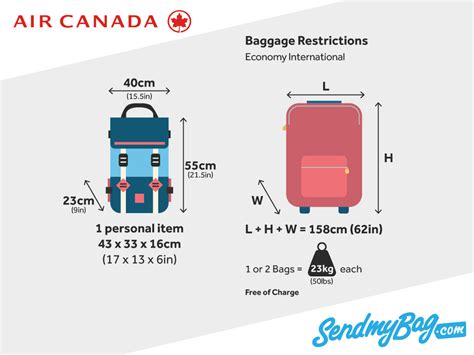
items into the cabin. This typically breaks down into one standard carry-on bag and one smaller personal item. The key here, guys, is to pay close attention to the size limits, as these are pretty strictly enforced to ensure everyone has enough space in the overhead bins and under the seats. For your standard carry-on bag, Air Canada generally allows dimensions up to
55 x 40 x 23 cm (21.5 x 15.5 x 9 inches)
, including wheels and handles. This is your main bag – think a small suitcase, a duffel bag, or a backpack that fits within these measurements. For your personal item, which could be a purse, a laptop bag, or a smaller backpack, the dimensions are usually a bit smaller, around
33 x 16 x 43 cm (13 x 6 x 17 inches)
. While Air Canada usually doesn’t have a specific
weight limit
for carry-on items (as long as you can lift it into the overhead bin unassisted, you’re generally good), it’s always wise to pack light. Overstuffing your carry-on can make it difficult to fit in the sizer at the gate, which could lead to it being checked at the last minute, sometimes with a fee attached. Believe me, that’s not how you want to start your international adventure!\n\nBeyond the dimensions, it’s also super important to consider
what
you’re packing in your carry-on. Remember the 3-1-1 rule for liquids, aerosols, and gels if you’re traveling from or through certain countries: containers must be 3.4 ounces (100 milliliters) or less, fit in one quart-sized bag, and be limited to one bag per passenger. This rule is a cornerstone of international travel security, so don’t overlook it. Essential medications, important documents, valuable electronics (like laptops, tablets, and cameras), and anything you simply can’t afford to lose should always go in your carry-on. Think about a change of clothes in case your checked bag is delayed, or items to keep you entertained during a long flight. Packing smart here means fewer worries. Items that are prohibited in carry-on baggage include sharp objects, flammable materials, and certain sporting goods, so always check the official list on Air Canada’s website if you’re unsure. The goal is to make your carry-on your ultimate travel companion, holding everything you need within arm’s reach while ensuring a smooth security check and comfortable flight. Paying attention to these carry-on rules for your
Air Canada international flight
ensures a more relaxed journey, allowing you to settle in and enjoy the ride without any pre-flight jitters about your bags.\n\n## Air Canada Economy Class G Checked Baggage Allowance: Your International Journey\n\nNow, let’s get to the heavy hitters: your checked baggage, specifically focusing on the
Air Canada economy class G baggage allowance international
. The ‘G’ fare often refers to a standard economy fare, which typically comes with a fairly consistent and generous allowance for international flights, but as always,
double-checking your specific ticket
is paramount. For most international routes, Air Canada’s standard economy (including many ‘G’ fares) allows for
one checked bag
free of charge. However, some longer-haul international routes, particularly to destinations like Asia, Australia, or certain parts of Europe, might allow
two checked bags
free of charge. This is where the destination factor really kicks in, and why that specific ticket review is so crucial!\n\nFor each allowed checked bag, there are strict weight and dimension limits you absolutely must adhere to. The standard weight limit for a single checked bag in Air Canada economy class international is
23 kg (50 lb)
. Anything over this will incur overweight fees, which can be pretty hefty, guys, so invest in a luggage scale if you’re a heavy packer! As for dimensions, the linear measurement (length + width + height) of your bag must not exceed
158 cm (62 inches)
. This includes handles and wheels, so don’t forget to account for those. Bags exceeding these dimensions are considered oversized and will also be subject to additional fees. Imagine getting to the airport, excited for your trip, only to be hit with a surprise C$100 or more charge for a slightly overweight bag. Not cool, right? That’s why being precise with your packing and knowing these limits for your
Air Canada economy class G baggage allowance international
is so vital.\n\nIt’s worth noting that while the ‘G’ fare typically falls under the standard economy allowance, Air Canada does offer different
